![[Staging: The Hiking Adventure]](https://staging.thehikingadventure.com/wp-content/uploads/2021/10/The-Hiking-Adventure-logo-high-res.png)
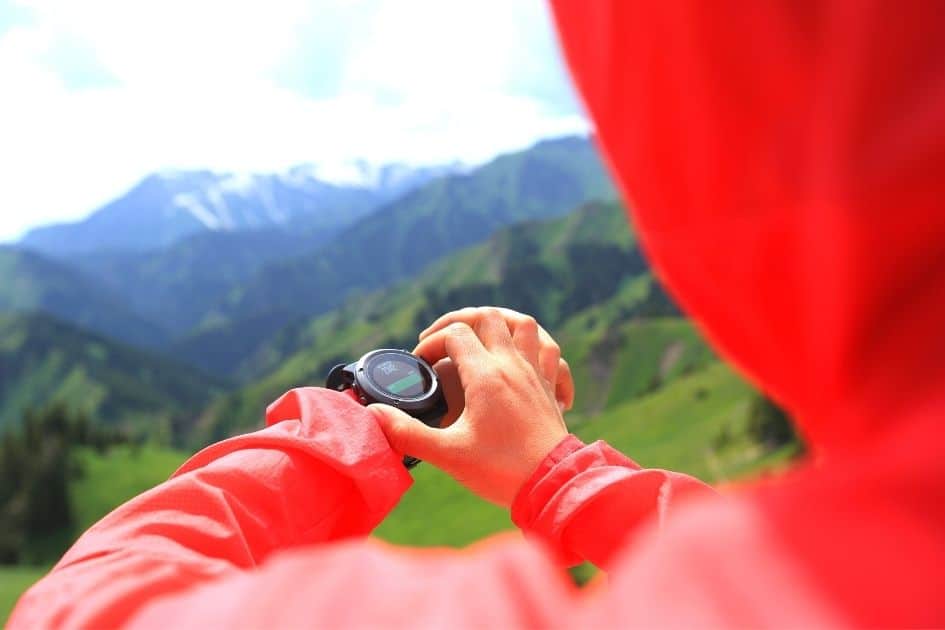
One of the keys to finding your destination is first knowing where you currently are. While handheld GPS devices have made this a lot easier, if you’re looking to save a bit of space then you might consider an Altimeter, Barometer, Compass (ABC) hiking watch.
The compass and altimeter, combined with a topographic map will allow you to navigate even if your GPS goes down. While the barometer will give you a heads up when there’s bad weather on the way.
The modern ABC watches have come a long way beyond just supplying elevation, direction, and barometric pressure info.
The prices of some of these watches have also become pretty eye-watering. If you’re looking for the best ABC watch for hiking then take a look at our reviews below. The best hiking watch goes beyond novelty and is extremely useful pieces of outdoor gear or mountaineering gear essentials you must bring.
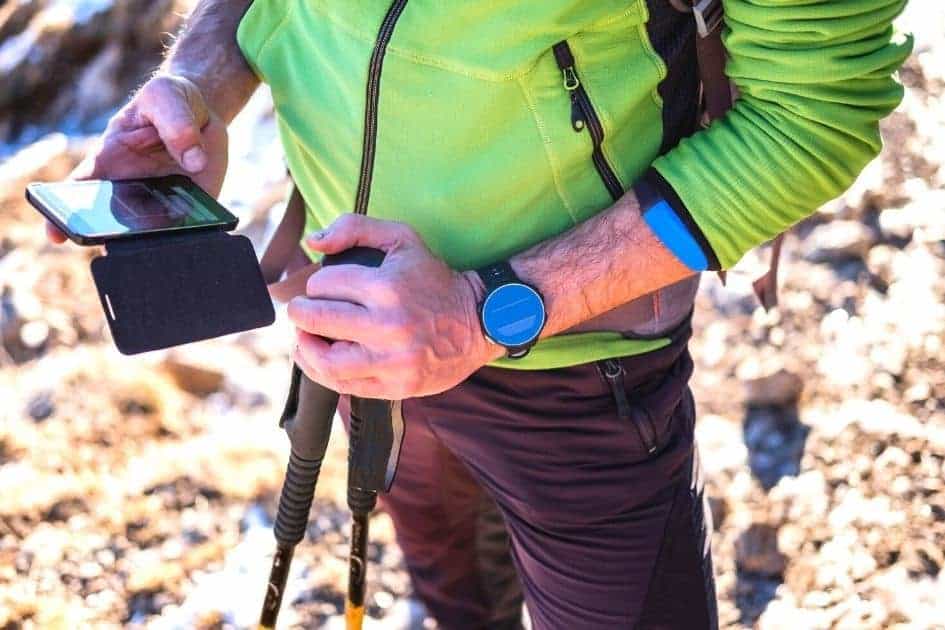
Best Hiking Watch Reviews
Each of the devices listed below has altimeters, barometers, and compasses as standard features, while some also have built-in GPS functionality.
Garmin Tactix Charlie
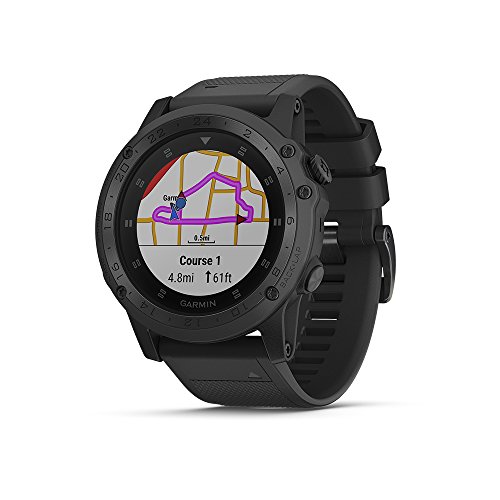
We’re not sure how Garmin managed it, but inside this stylish compact design, you get all the features of a great ABC watch, GPS functionality, fitness tracking and a bunch of other features.
The display is fully-customizable giving you both analog and digital options with plenty of designs downloadable from Garmin.
We’re wary of ABC’s that incorporate GPS because of battery life, but this watch will keep going anywhere from 20 hours to 3 weeks depending on your use.
We really liked that you can pair it with your smartphone to get mail, texts, and alerts displayed on the watch.
If you’re jumping out of planes, climbing mountains or heading into the unknown, then the performance and durability of this watch easily justify the price tag.
What We Like
- GPS and GLONASS built in makes this a true navigator watch
- Beautiful styling
- Good wireless connectivity to smartphone or for updating via wifi
- Display is easy to read even in full sunlight
- TracBack function makes it easy to retrace your steps
- Decent battery life in spite of GPS
What We Don’t Like
- Price!
Suunto Ambit3 Peak HR Running GPS Unit
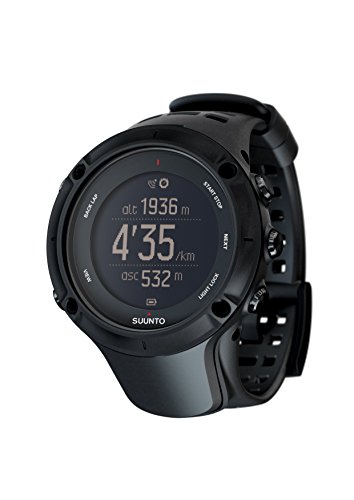
If you want a mid-priced ABC hiking watch with GPS, and a heart-rate monitor, then this is a great option.
The sensors work really well (after some simple calibration) and the GPS is accurate. It seems there’s no end to the level of customization and features available via the phone app and Movescount website.
It pairs with your phone to display mail, text, and call alerts but you can’t reply or control the phone’s media player from it like a true smartwatch.
There’s no subtlety about this watch. It’s really big, which is great if you like a large display, but means it doesn’t work as an everyday watch when you’re not out scaling peaks.
This is a great watch for trail running, hiking or even just for logging your workouts when you’re training.
What We Like
- Built-in accurate GPS receiver
- Impressive battery life – 30 to 200 hours depending on GPS use
- Route navigation and track back for easy navigation
- Connects to phone for semi-smartwatch capability
- Customizable on the go via free app on phone
- Good price for ABC with GPS
- Ships with heart-rate chest belt
What We Don’t Like
- Big and bulky
- Heart rate chest strap it comes with could do with an ergonomic redesign
Garmin Fenix 6X Pro Solar MultiSport

The GPS/GLONASS receiver provides very accurate position info and the ABC sensors perform just as well. This hiking GPS watch comes preloaded with TOPO maps, ski maps from over 2,000 resorts, built in sensors 3-axis compass, gyroscope and a barometric altimeter.
If you like having plenty of biometric data in addition to your usual ABC info, then the Fenix will definitely impress.
The design is fairly sleek for all the features it has built in, and there is plenty of watch faces you can download for it. You won’t need to buy any other watch since this best GPS watch for hiking doesn’t disappoint either with the range of accessories to modify the look. Options range from watch straps, dust plug protectors, heart rate monitor straps, and charging kits.
Garmin stepped up their smartwatch game and added music storage with premium streaming service (may require a subscription with third-party music provider) support, smart notifications, and contactless payments (not supported in all countries).
We really liked the Garmin vivosmart wrist-based heart rate monitor, which means you can get rid of that uncomfortable chest strap.
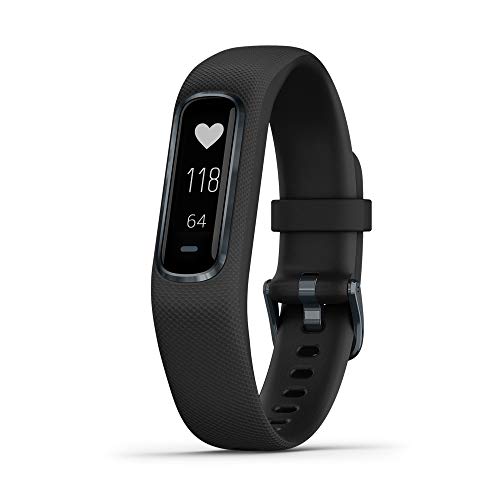
-Fitness Tracker, Sleep Monitor, Messages, Heart Rate Monitor
-Battery life keeps up with you; lasts up to 7 days (excluding Pulse Ox sleep tracking)
-Get vibration alerts for All notifications, including calls, text messages and more
Solar-powered multisport GPS watch with large 1.4 inch display (36% larger than previous Fenix models) uses the sun’s energy to extend battery life and assure more on-wrist time for your off-grid activities. The internal rechargeable battery will last you 21 days in smartwatch mode with an extra 3 days using solar.
The price tag is pretty high but if you want detailed bio-data at your fingertips combined with excellent navigation features, then it doesn’t get much better than this.
What We Like
- Built in GPS and GLONASS gives very accurate position
- Plenty of free watchfaces downloadable from Garmin
- Backlighting and bright colors make display easy to read in all conditions
- Excellent biometric data reporting
- Scratch-resistant, durable sapphire lens
- WiFi enabled for easy connectivity
- Monitors heart rate via wrist strap
What We Don’t Like
- Expensive
Casio ProTrek PRW 3000 1A
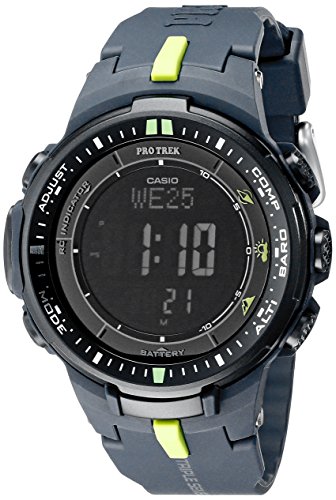
The PRW3000 is a slimmed down, updated version of the popular PRW2500.
Being solar-powered this watch has excellent battery life and will give you around 7 months of operation on a single charge even if it doesn’t get any light on it.
The design is the standard Casio look which is more function over form, but if you’re after a useful piece of equipment rather than a fashion statement then it definitely works.
The ABC sensors work well with the altimeter measuring 5? (or 1m) increments, the compass displays 1 degree 60 seconds continuous measurement and the barometer giving pressure change alerts.
If you know how to read a map and use accurate ABC data, then this watch will give you that while saving you the cash that a GPS watch would cost you.
Casio removed the tide and moon phases though so if these are important for you then you may want to stick with the PRW2500.
What We Like
- Backlight can be set to come on automatically when raising wrist
- Solar powered with auto power saving mode gives excellent battery life
- Multi-band atomic clock for extreme time accuracy
- Very accurate Altimeter Barometer and Compass data
What We Don’t Like
- No GPS
- Not a very attractive watch
Suunto 9

If you like planning your trip before heading out then you’ll love the Suunto 9 Multisport GPS Watch with BARO and Wrist-Based Heart Rate
You can use the great topographic maps on Suunto’s Movescount website and then upload your planned route to the watch.
This makes it so easy to head out on a new route with confidence.
The construction of this watch is rugged and tough but they’ve managed to still keep it very attractive. We really liked the sunrise and sunset time feature, which helps you plan effective use of available daylight hours.
Another handy feature is that you can set the backlight to flashlight mode if you’re clutching around in the dark trying to find stuff or if you need to check your map at night.
Rated as one of the best GPS watch for hiking, due to the three predefined battery modes ” Performance, Endurance and Ultra ” deliver from 25 hours to up to 120 hours of recording time with GPS tracking on.
Other smart features include Storm alarm feature that activates when a rapid drop in air pressure is detected over a 3 hr. period. The Suunto 9 watch alerts you with alarm sounds and flashes to indicate bad weather is headed your way, giving you enough time to prepare or pack up.
The battery lasts around 25 hours when you need to track your most extreme athletic hikes, which means you’ll need a good portable battery charger to monitor your recovery time of lounging by the lake.
What We Like
- GPS and GLONASS enabled
- Plan your trip by uploading routes before heading out
- Breadcrumb feature makes it easy to find your way back
- Some smartwatch features when paired with smartphone
- Attractive design means this works as an everyday watch too
What We Don’t Like
- Battery life isn’t great
Lad Weather Compass Altimeter Barometer Watch
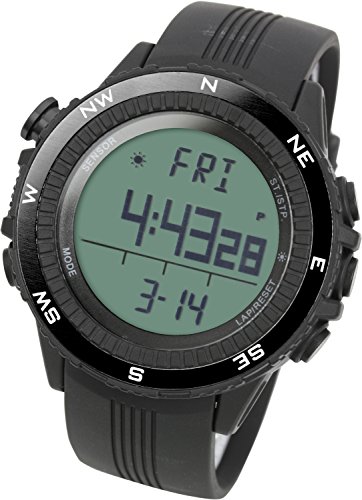
If you just want basic ABC data or if you’re on a budget then this is a good entry level Altimeter Barometer and Compass watch.
Just because it’s affordable, doesn’t mean you don’t get decent performance. The accuracy of the ABC data is pretty much spot on and the altimeter displays in increments of 1m, which is better than a lot of the more expensive ABC hiking watches.
The temperature sensor is a nice touch, although it’s more accurate when the watch isn’t being worn.
This is not the most durable of watches though. It’s water resistant but we wouldn’t recommend testing that feature, and the screen scratches easily so you’ve got to be a little careful with it.
This is a good budget option if you’re not planning on using it too often.
What We Like
- Great price for an entry-level ABC watch
- Built in thermometer
- Tracks accumulated ascent and descent
- ABC data surprisingly accurate for this price
What We Don’t Like
- Acrylic glass face scratches easily
- Why put a compass bezel on a watch that has a digital compass?
Tissot T-Touch Expert
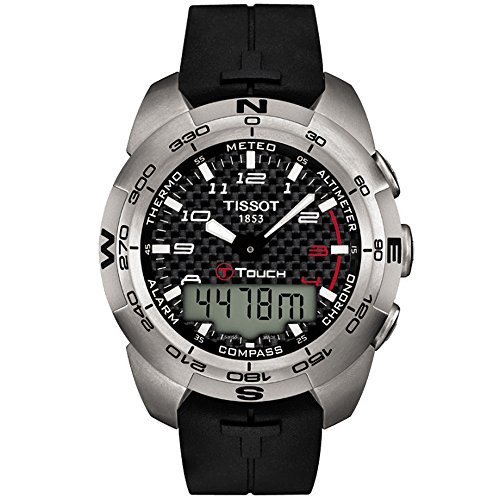
If you like your adventure to have a touch of style, then you’ll enjoy seeing this watch on your wrist.
You get the accurate timekeeping you’d expect from a Swiss watch, combined with accurate ABC data that is easily accessible.
We love the touch screen interface. Selecting one of the ABC modes is as simple as pressing one button and then touching the corresponding section of the watch face.
The digital and analog display work together beautifully to show data in an easy to read manner.
It’s especially cool to see how the watch hands change from telling time to becoming the compass arrows when selecting the compass mode.
It looks amazing with the stainless steel bezel, and works beautifully but this comes at a price!
What We Like
- Beautiful, stylish design
- Accurate Swiss movement – who doesn’t love a Swiss watch?
- Touch screen interface make selecting functions a breeze
- Analog / Digital display does a great job of indicating time and ABC data
What We Don’t Like
- High price tag
- You have to cut the wrist strap to size
Suunto Core
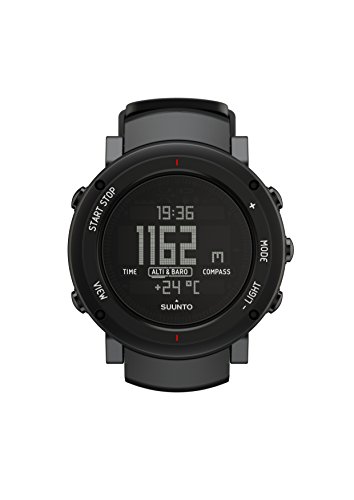
ABC GPS Hiking watches aren’t usually known for their good looks but the Suunto Core not only functions well, it looks good too.
The ability to change the battery easily is great because it saves you a trip to a jeweler. Just make sure you get that back on properly, because if it doesn’t seal it won’t survive getting wet.
While this watch gives accurate info, it does seem to have some quality issues. The buttons feel like they might end up getting stuck after a while.
If you’re looking for an ABC watch to use periodically then this is a good mid-range option. When it works, it works well.
The durability of the buttons and strap won’t hold up to daily use or regular outdoor activity.
What We Like
- Good accuracy from ABC sensors
- Large, easily readable display in daylight
- Uses standard CR2032 batteries so they’re easy to replace
What We Don’t Like
- It’s really big
- Straps and buttons aren’t very good quality
- Too dim for night-time use
Casio Pro Trek PRW-6000Y

This is one tough watch! From the non-reflective, scratch resistant mineral glass to the carbon fibre strap, everything about this watch is built to last. It is seriously big though.
The crown is massive which makes it easy to use but gets in the way a little when bending your wrist. It’s great to be able to use the crown to navigate the options and settings without having to press any other buttons.
The thermometer is a nice feature but it will only give you an accurate reading when it’s off your wrist.
It’s got great ABC features which perform accurately even above 8000 feet but there’s a bit of a learning curve.
We liked the analog / digital look and how the hands automatically move out of the way of the digital display when changing settings.
What We Like
- Solar powered so the battery lasts for ages
- Atomic clock keeps time super accurately and you never have to set it
- Waterproof and extremely rugged and tough
- Built in thermometer
- Strap is really good quality and built to last
- Intuitive, easy to use interface
What We Don’t Like
- Big and bulky with a large crown
- Watch hands aren’t luminescent enough to read in the dark
- A bit expensive considering that there’s no GPS
Casio ProTrek PRW 3500-T

If you’re a fan of Casio but want a watch with a little more elegance then you’ll love the PRw-3500.
The functions are fairly easy to navigate, but it you’re going to need to read the manual a few times.
While it looks really elegant it’s been designed to survive tough conditions. The strap is durable and the tough glass is slightly recessed to give it extra protection from scratching. Even though it’s super tough it is extremely light and comfortable to wear.
As with other Casio ABC watches you get endless battery life because it’s solar powered, (although it does run on a battery) and accurate data from the Triple Sensor.
What We Like
- Beautiful design makes this watch suitable for any occasion
- Really light in spite of how much functionality they packed in
- Titanium strap and tough glass make this watch almost indestructible
- Accurate atomic-sync timekeeping
What We Don’t Like
- Pricey
Our Favorite
The Suunto Ambit3 Peak is our top pick.
Not only does it look good but it delivers excellent ABC performance, GPS functionality, smartwatch features and fitness tracking while still delivering a decent battery life performance.
It’s not the cheapest, nor the most expensive ABC watch, but then again, it has more features than you’d get from some of the more expensive options.
The ability to customize it, the accuracy of the ABC sensors and the great data displays make this our favorite.
Whilst we love the Tissot and you can never go wrong with a Garmin, we don’t feel that the extra price tag is worth it, especially if you’ve got a handheld GPS already.
Best for Budget
If you want a cheap ABC watch that actually works then the Lad Weather Compass Altimeter Barometer Watch is a solid choice.
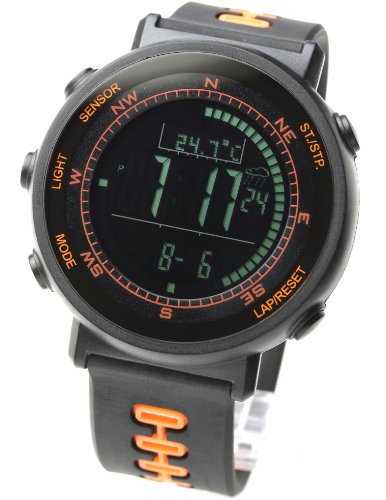
You get ascent and descent tracking and accurate ABC data in a watch that costs a fraction of some of the others we reviewed.
The resolution of some of the measurements like the altimeter are really impressive too.
It’s not as tough as the more expensive watches and you need to be careful not to scratch the screen but it’s a good option if you’re looking for an entry level ABC watch.
ABC Watch Buying Guide
ABC watches vary in price and features, from very expensive fully-loaded devices to cheap watches with basic functionality. Understanding the different features will help you decide what features are important for the kinds of activities you’re planning.
Altimeter
If you want to know your height above sea level then you’re going to need an altimeter.
Most ABC watches rely on atmospheric pressure to calculate your altitude. Altimeter watches with GPS will sometimes use GPS data to get a more accurate reading.
Check the period that your altimeter logs at. Some will only log the altitude every hour while others will give you a better resolution.
Also, if you’re mountaineering or planning on spending time on some serious peaks, you need to make sure what the top end of your altimeter is.

There doesn’t seem to be a standard maximum height above sea level that they all aim for.
Most good watches will give you a graph of your ascent and descent, which can be great for training purposes. You need to decide whether you need pinpoint accuracy of your elevation (for example to find your way to a high camp in a snowstorm) or whether it’s idle curiosity of how high you are.
Because atmospheric pressure changes with weather events as well as with altitude, you will need to calibrate the altimeter before you set off, and during your hike.
Altitude is measured by the drop in barometric air pressure between where you are, and the baseline for sea level. However, a sudden drop in barometric pressure can happen as a result of a weather front.
So don’t assume you are going mad if you are idly sitting on a rock having your lunch and suddenly your watch thinks you’ve ascended 1000 feet! Do calibrate manually whenever possible if accuracy is important to you.
Barometer
The important info you want from your barometer isn’t the current pressure but rather what the trend in the pressure has been over a period of time.
Keeping an eye on changes in atmospheric pressure will give you a good idea of what the weather is going to do.
If your barometer indicates a rise in pressure then you should be in for some good weather. If the pressure drops, then it means there’s some bad weather on its way.
If you’re wondering whether to take on that next peak, or to turn around and head back to camp, then this is good info to know.
Basically, if pressure is dropping, a storm is likely on it’s way. Some watches have a storm alarm which, as the name suggests, alerts you when there is a drop in air pressure over the course of a short time which would indicate that a storm is likely on its way.
Storm alarms are handy since you ought to be hiking, not staring at your watch all day!
Compass?
Most ABC watches will use a 3-axis digital compass that will work regardless of the orientation of the watch.
Check the resolution of the compass if you need very precise readings for your navigation. Also, remember that the compass will automatically align with magnetic north.
For accurate navigation you need to set the declination so that the compass shows you the true north. The declination is the difference between true and magnetic north and it varies from place to place.
Some topographic maps will indicate the declination for that area or you will need to look it up online.
Easy to Use?
It doesn’t help if your watch is capable of measuring all kinds of data if it’s difficult to access it. You want the interface to be intuitive and easy to use.
Make sure that the info you’re after is accessible, with one or two button presses, rather than having to do a deep dive into the menus.
Buttons
Make sure that the button layout works for you, especially if you’re a lefty.
Also, if you go out in the cold, you will want to ensure those buttons are glove-friendly, otherwise, you’ll be pushing two at once.
Large, well-spaced buttons work best.
Screen
The display needs to be clear enough in sunlight so that you don’t have to stop and squint to read.
Some watches these days use negative displays (white on black) which looks really cool but some people find them harder to read than the conventional positive LCD displays.
A decent size screen will make it easier to see in poor weather, even though it can feel a bit bulky if you have a small wrist.
Make sure the glass is tough enough so that it doesn’t scratch easily – mineral glass displays are the most durable since they’re heat-hardened. These kinds of displays cost more but a dim, scratched-up display renders the watch useless.
Strap
A rubber strap tends to work best for outdoor pursuits, being comfortable and flexible. A strap with a lot of holes makes for easy adjustability, and getting a strap that’s long enough so you can wear the watch on the outside of your clothes is handy for when the weather is bad.
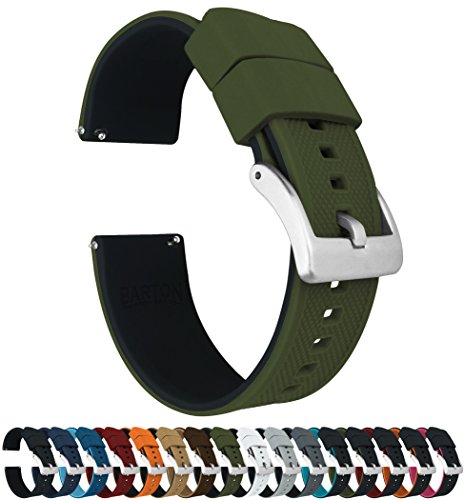
Leather and metal are other options, personally, I find the metal ones to be the most durable, but the least comfortable.
Accuracy
If you want bragging rights then by all means, go for the most accurate ABC watch.
You’re going to pay for it though.
Decide which measurement is most important for your specific needs. Some watches will have spot on compasses but their altimeter may be a little off or vice-versa.
In this respect, perfect can be the enemy of good enough.
Most ABC watches these days are pretty accurate and it’s generally their other features that would be the differentiator.
There is a difference between going climbing in remote mountainous regions and wanting a watch that logs your average day hike.
GPS
Having a GPS built into the ABC watch can be a great help. It saves you from checking your map every few minutes. If there is route planning and the track back features, this makes it easy to find your way back, even in the dark.
Having a built-in GPS does come at the price of battery life. GPS functionality chews through batteries, so do ensure you’ve recharge potential on your way. If you’re going for a GPS-enabled watch, pay close attention to real battery life, not just what the manufacturer claims.
Some watches allow you to connect to apps (Garmin, Movescount, Strava) and track every nuance of your hike or your fitness program, and those that allow you to upload routes can dispense with a handheld GPS.
Thermometer
Some watches feature a thermometer, which is useful if you are having an argument with your tent-mate about how cold it is.
Do be aware that the most accurate reading will be had by taking the watch off. That way it’s not picking up your body temperature.
Sunrise/Sunset Times
Knowing how many hours of daylight you’ve got can help you plan your hiking – this is particularly useful if you are in a National Park that has curfews or are hunting/fishing and need to stay within a certain time range.
I particularly like knowing how many hours I’ve got available for sleep!
Water Resistance
It’s no good having a watch that pretends to be rugged and outdoorsy if it can’t withstand doing the dishes.
At the very least you’ll want one rated to 30m or more – note that this won’t allow you to actually immerse the watch to 30m.
If you are planning on doing some water activity such as Kayaking or swimming, I’d pick one that’s water resistant to 100m, although 50m would likely be OK.
For diving, you’ll want something rated to over 100m – and honestly, I wouldn’t be going diving in a hiking watch.
Battery Life
This is important. There’s no good to be had relying on a watch if the battery is going to give out every few hours. Some watches come with a “traditional” watch battery, that lasts a year or more. Those with GPS, fitness trackers and social media connectivity take a lot of power and will need to be charged – either by solar or by USB.
Solar-powered watches are pretty convenient unless you’re hiking in the Arctic during Polar night, as many require as little as ten minutes a day to stay charged.
USB-charged watches are a bit more annoying as you’ve got yet another lead and a portable battery charger to carry with you.
Note that battery life is significantly compromised in the cold. If you are going up a decent size mountain where temperatures are below freezing, you’ll need to keep your batteries warm as well as charging them more often.
Heart Rate Monitor/Fitness Tracking
For those of us who like to track every metric available, some watches come with a heart rate monitor (either a chest strap or a built-in wrist monitor) that allows you to track your heart rate and calorie burn. Getting one with these features means you can get rid of your Fitbit once and for all!
Smartphones, Apps & Connectivity
I still remember the days of going hiking or camping without so much as a walkie-talkie, let alone a telephone – much less a smartphone.
Of course these days you can pretty much have your watch post to Facebook for you and message your mom. Well, perhaps not quite.
Just be aware that these features drain your battery pretty quickly. Bluetooth and wifi connections mean you can download all the data you’ve collected about your trip and boast on social media about how far you’ve trekked and how high you climbed.
Conclusion
If you invest in the best altimeter, barometer, compass watch and use it in conjunction with a good relief map then it can save you from having to carry a handheld GPS device.
How helpful that information will be really coming down to accuracy and ease of use. If you just like the idea of knowing where north is or having a fair idea of your height above sea level then a cheap ABC watch will do.
If you want something reliable and accurate that you can use to make key hiking and climbing decisions then spend a few more dollars and get the best ABC watch that your budget allows for.’
Need More Advice on Gear and Footwear?
Here are some links to our most popular articles:
- Arc’teryx Alpha SL 23 Backpack– Tested in Early Spring
- Best Hiking Apps for Your Next Adventure
- How to Avoid Getting Lost When Hiking- It’s Easier Than You Think
- Lost on a Trail- Best Locator Beacons to Get You Home Alive
Product image credits: Amazon.com








Last update on 2022-12-23 / Affiliate links / Images from Amazon Product Advertising API