![[Staging: The Hiking Adventure]](https://staging.thehikingadventure.com/wp-content/uploads/2021/10/The-Hiking-Adventure-logo-high-res.png)

Identifying bobcat or coyote tracks can be tricky. There are some subtle differences between the two species’ paw prints, which can make it difficult to distinguish them from each other.
Coyotes and bobcats are both members of the Canidae family.
They share similar characteristics such as long legs, short tails, and large ears. The main difference between these animals is their size. Coyotes tend to weigh around 30 pounds, whereas bobcats usually weigh around 50 pounds.
Here we look at the key differences between bobcat and coyote tracks.
Key Differences Between Bobcat & Coyote Tracks
Both bobcats and coyotes have four toes on each foot, with a claw on the front toe. Their claws are very similar in appearance however their tracks look different.
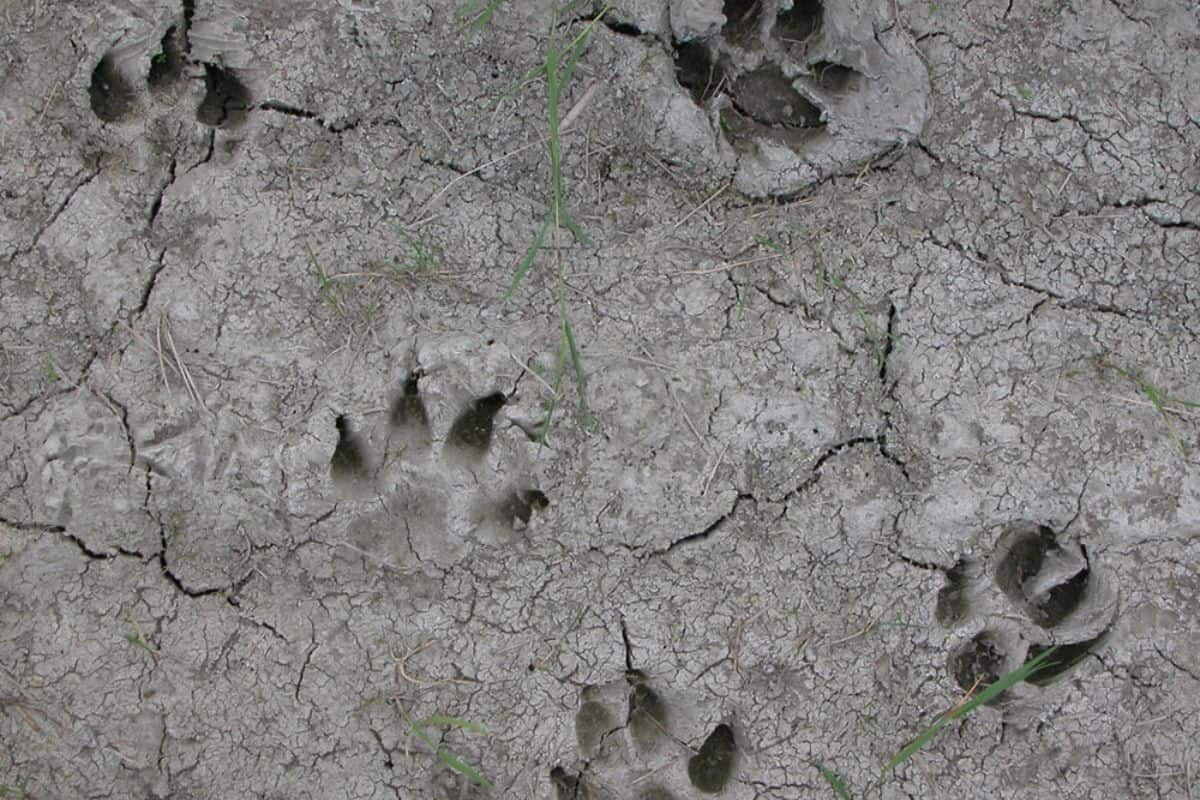
While there are many similarities in the way the tracks can look, depending on how clear the track is, there are also key differences. We explain these below.
Pad Shape
One of the first indicators is the shape of the pads. The pads of a bobcat are rounded, while those of a coyote are pointed.
The shape of the pads will be familiar and easy to identify as the more pointed pad shape is similar to a dog, which coyotes are and the more rounded shape is the same as animals from the cat family, which a bobcat is.
Size
As mentioned above, the main difference between bobcats and coyotes is body weight. A coyote will typically weigh about 30 pounds, while a bobcat weighs about 50 pounds. This means that bobcats generally leave larger footprints than coyotes.
Distance
Another important factor to consider is how far apart the feet were placed when making the track. It’s not uncommon to see a pair of tracks where one animal has stepped forward and another has stepped back.
This type of movement creates a gap between the two sets of tracks.
If the distance between the tracks is small, this may indicate that the tracks belong to an adult bobcat.
Adult bobcats are known to travel in pairs, so if you’re seeing a group of tracks that are close together, it could mean that you’ve found a mother and her cubs.
If the distance between the tracks seems to be large, however, this could indicate that the tracks belong either to a young bobcat or a coyote. Young bobcats are more likely to travel in groups, while coyotes rarely do.
Hind Foot
When comparing bobcat and coyote footprints, pay attention to the length of the hind foot. When viewing a single footprint, the hind foot tends to be longer than the forefoot.
This is because the hind foot is used to support the animal during its stride.
When looking at a series of tracks, however, you’ll notice that the hind foot becomes shorter over time. This is because the animal’s weight shifts onto the forefoot.
As the animal continues to move forward, the hind foot eventually disappears completely.
Look for other clues as well. For example, bobcats tend to step off the ground with all four feet, while coyotes often take only three steps before landing on their rear paw.
Behaviors
Lastly, try to identify the species based on behavior. Coyotes are usually seen traveling alone, but they can sometimes form packs. They also tend to avoid humans. On the other hand, bobcats are solitary animals that are active both day and night.

Be Careful
Bobcats are also territorial animals. In fact, they have been known to attack people who enter their territory.
Coyotes, on the other hand, are much less aggressive. They are opportunistic hunters and scavengers, which makes them very adaptable.
Importance Of Being Able To Identify Animal Tracks
If you want to hike safely, you need to know what kind of animals live in your area. You don’t want to get attacked by a bear, bitten by a snake, or eaten by a mountain lion!
Knowing what kinds of animals live near your campsite will help you make smart decisions about where to go hiking.
For instance, if you are camping near a river, you might want to steer clear of bears. Bears like rivers, and they use them to hunt salmon.
Salmon is a favorite food for bears, so when you see a bear walking along a riverbank, you probably should refrain from approaching him. Instead, just keep moving until you reach another part of the trail.
Similarly, if you plan on spending any amount of time in the wilderness, you should familiarize yourself with the local wildlife. This way, you won’t accidentally run into dangerous predators such as cougars and wolves.
Final Thoughts
While these are some key differences between bobcats and coyote tracks, there are many others. We recommend looking into what animals are local to the region you plan on hiking through.
You can find information about national parks and useful tips on how to visit these, and more rural areas safely.
When hiking, always make sure someone knows where you are going and take the time to prepare properly. These important safety steps could ultimately save your life, since you’ll be able to identify animal tracks you encounter on your hiking trail.
Need More Advice on Gear and Footwear?
Here are some links to our most popular articles:
- What to Do When You Encounter a Bear- Bear Sprays
- Insulated Jackets and the Temperature Ratings
- Bear Cans and How to Keep them Out of Your Food
- How to Hike Safely When on the Trail
- Best Hammock Tarp-
- Best Three Season Sleeping Bags for Backpacking
Join our Facebook Group – Outdoor Gear Reviews, Deals, Hacks & Advice- Backpacking, Hiking & Camping to get the latest reviews, deals, and discounts on backpacking, camping, and hiking gear. Share tips, and advice and to show our love, we also give monthly gear giveaways.