![[Staging: The Hiking Adventure]](https://staging.thehikingadventure.com/wp-content/uploads/2021/10/The-Hiking-Adventure-logo-high-res.png)

Whether you are looking for a jacket to keep you warm on your daily dog walk, or are looking for the perfect addition to your hiking kit, Arc’teryx jackets are a great place to start.
However, with so many similarities between Arc’teryx jackets, it can be difficult to know which one will best meet your needs.
You may already be familiar with Arc’teryx products, perhaps you already own the Atom and are wondering whether it is worth switching to the Proton.
Maybe you have looked at both online already and are confused as to what the actual differences are between the two.
Don’t worry if you feel like you are staring at the same jacket twice. We have taken an in-depth look at both of these lightweight jacket options to help you make the best decision for you.
Arc’teryx Atom

The Atom is the OG lightweight jacket for high output activities from Arc’teryx. Its light and packable design make it a staple performance warming layer that is perfect for alpine ascents, rural adventures, as well as everyday wear.
Designed to retain heat when wet, and resist wind and weather while maintaining breathability and freedom of movement. It is a reliable addition to any hiking or climbing kit from a well-known brand.
All of this makes it difficult to see how Arc’teryx could improve on this line of activewear.
Arc’teryx Proton
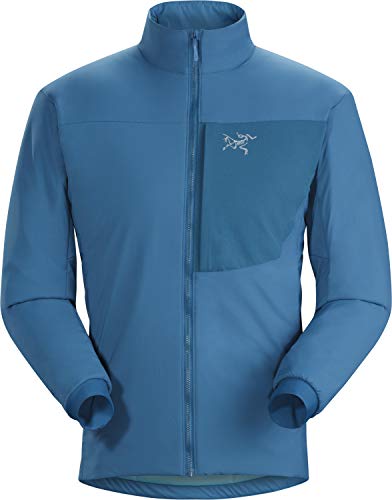
The Proton is the new contender in the Arc’teryx repertoire. While extremely similar to the Atom, the Proton has some small, significant differences. Equipped with a breathable insulation package, the Proton manages the dynamic, ever-changing needs of high output activities.
With the advances in breathable technology available for this jacket, the Proton is a versatile, high-performance mid-layer for diverse climbing activities.
How Do The Proton And Atom Compare?
With so many similarities between these two jackets, it can be difficult to decide which one will best fit your needs and wants.
There are many factors that are considered when we purchase clothing for diverse physical activities. We have broken down the key features most useful in choosing a mid-layer jacket.
Insulation & Breathability
| Arcteryx Atom Hoody Materials | Arcteryx Proton Hoody Materials |
|---|---|
| Lining: Dope Permeair™ 20D – 100% nylon – Dope Dyed, bluesign | Octa® Loft breathable insulation – 100% polyester |
Insulation: Coreloft™ 60 (60 g/m²) – 100% Recycled Polyester – bluesign Approved Material | Fortius™ Air 20 – 84% nylon, 16% elastane |
| Self: Tyono™ 20 denier shell with FC0 DWR treatment – 100% nylon | |
| Stretch fleece – 94% polyester, 6% elastane |
Both jackets are made with synthetic insulation. This is often preferential over natural insulation such as down for a few reasons. For starters, with synthetic insulation, you are not going to find yourself being poked with a feather during a critical point in your climb or hike.
Another benefit of synthetic insulation is its ability to dry quickly. This is particularly useful if you are looking to embark on long or back-to-back adventures where a quick laundry turnaround is necessary.
The synthetic insulation in both the Arc’teryx jackets works in a similar way to down insulation. Layers of polyester sheets line the jacket and trap air and body heat between them.
The synthetic insulation in the Proton jacket is more breathable than the Atom due to advancements in breathability technology.
The Proton jacket’s high-tech insulation allows for heat and moisture to pass through the layers of fabric and insulation which creates a breathable and self-regulating mid-layer jacket.
If advanced insulation technology is a must for you then the Proton is your best bet. The fact is, the Atom simply cannot stand up to the modern standards of breathability that are becoming standard among activewear jackets.
Warmth
Another important consideration when choosing a new climbing or activity jacket is the warmth that it can provide you. Commonly measured by the lowest temperature in which you can wear the jacket without feeling uncomfortably cold.
The Arc’teryx Atom and Proton jacket’s lowest comfortable temperature is measured while wearing the jacket over a regular shirt with no outer shell.
The weather for the test is dry conditions and a light wind. The jacket is worn for daily use such as power walking rather than high output activities such as climbing.
In these conditions, the Arc’teryx Atom is comfortable down to a minimum temperature of 36 degrees Fahrenheit or 2 degrees celsius. The Arc’teryx Proton is comfortable down to a minimum temperature of 37 degrees Fahrenheit or 3 degrees celsius.
Statistically, the Atom is a better option for those whose main concern is maintaining warmth whilst partaking in outdoor activities.
However, the difference between the two jackets is negligible. Therefore, if you are less concerned about the warmth capabilities of the jacket both are viable options.
Weather Resistance
When deciding on a new outdoor activities jacket, weather resistance is an incredibly important factor to consider. Whether you are someone who only ventures out when the forecast is good, or are an all-weather adventurer, how your clothing will hold up is crucial.
Both the Atom and the Proton are coated with a durable water repellent spray. This means that both jackets will repel rather than absorb water in the event that it rains during an expedition. This coating is also effective at reducing the amount of time it takes for the jacket to dry.
As the coating is just sprayed on, the jackets can lose their water-repelling capabilities over time. The purchase and application of a durable water repellent spray is a worthwhile investment.
The Proton demonstrates a higher level of weather resistance for both rain and wind due to its face fabric. The abrasion and weather-resistant design of the material provide the jacket with a higher threshold of weather in which it can be worn.
The Proton can also be worn as a standalone piece of clothing. It can also undertake high output activities, due to its weather resistance capabilities.
The Atom is also weather-resistant but to a lesser extent. It still provides a high level of weather resistance but is bested by its younger sibling.
Again, this could be down to advances in weather resistance technology. If your main concern is water resistance, the Atom would still be a good choice of jacket.
Design
Both of these jackets feature three zip pockets, two external hand pockets, and an internal chest pocket. These are great for holding smaller valuables on your hikes and climbs. Also, it does well as providing a space for your hands to be protected from the elements if necessary.
Similarly, both jackets are made with the dual hem adjustment feature at the base to increase the efficiency of the heat retention from the insulation on colder or windier days. Simply pull and secure the drawstring with the cord fastener for a closer fitting bottom hem.
Another shared feature of the two jackets is the No Slip Zip design. Plainly speaking, the zip is designed to lock into place when closed.
This is an ideal feature for both the all-rounder uses of the Atom and the high output uses of the Proton. The last thing you want when skiing down a piste or scaling a cliff face is a slowly opening jacket.
The Proton jacket is slightly longer than its counterpart. The increased length of the Proton can boost the warmth felt by the user which makes up for the slightly less insulation as compared to the Atom.
The comfort of the extra length is dependent on the user. But if you dislike feeling restricted around your hips, especially when hiking or climbing, then the shorter Atom would be a better option for you.
Both the Atom and Proton jackets have been designed with stretch knit cuffs to assist with layering, as well as increased durability, warmth, and ease of removal.
A final key design feature of both jackets is the gusseted underarms. The paneling under the armpits provides a greater possible range of movement for the wearer.
This is a great feature, particularly for the Proton which is designed to be used during high output activities which require a significant amount of movement. No one wants to have their movement restricted by their jacket when they’re skiing or climbing.
In truth, there are very few differences between the Atom and the Proton in terms of design. Both appear to have been made to practically the same specifications, and the main differences come in the technical features instead.
Style
If you are someone who is invested in the style or look of their activewear, this could be a great persuasive factor in which jacket you choose to purchase.
While again these jackets are extremely similar in all aspects of their appearance, there are a few differences that could make or break the jacket for you.
The Atom jacket features more style aspects than its younger sibling. Designed with a mid-height collar that adds more than increased insulation, it allows for stylish layering, either with other activewear pieces or on a more casual basis.
The Atom also features a dropped hem style which adds more than just functionality with its heat retention. Dropped hem jackets are a very popular style for activewear, partially for their ability to make clothing appear more streamlined and can even out proportions.
In a similar vein, the Atom is only available in a slim-fit cut. While this is mostly to allow for easy layering, it is also a style that can be appealing to people when choosing activewear. Slim-fit designs also lend themselves to the possibility of wearing activewear as casualwear.
Additionally, the material of the Atom is smooth and soft to the touch, making it an enjoyable piece of clothing to wear regularly.
Finally, the Atom features a dope-dyed lining fabric. This is a style feature that might require a little bit of explanation for people, but if you are someone who is passionate about the sustainability of their clothing, it could be a great selling point for you.
The proton on the other hand is slightly more functional rather than stylish. Similar to the Atom, it features a trim fit cut to assist in layering and to fit in with current trends or preferences for activewear style.
The Proton also features a dropped hem style along the bottom of the jacket. Again, this can be a popular choice for the look that it gives in addition to the added technical benefits offered.
The added style aspects of the Atom are not particularly noticeable by those who prefer functionality over style, but their existence can make the Atom the preferred choice for people placing more weight on their activewear look.
This is a very personal choice and something that could tip you over the edge either way with these very similar jackets.
Weight
The weight of these jackets is another area where the differences are negligible. The Atom weighs 145g or 12.2 oz. The Proton weighs 340g or 12 oz. While this weight difference doesn’t seem like it would be worth mentioning at all, it does point to an interesting difference between the two.
Despite the practically identical weights of these jackets, the Proton jacket is almost half an inch longer. This weight similarity is likely due to the differences in insulation used in the jacket. In order to make the jacket more breathable, the insulation is less dense and therefore, makes the jacket lighter.
Again, the difference in weight is so tiny as to render it insignificant. A preference in weight between these jackets will simply come down to the psychological impact of knowing that one is slightly heavier than the other and the effect that could have on your sporting performance.
Certainly, weight is a factor that is very much a personal preference in this case.
Packing
While the Atom and the Proton jackets are both lightweight, neither is folding into its own pocket. Arc’teryx were never intending for either of these jackets to be able to fold away into their own pocket or small bag. It is not a design feature they are known for either.
However, the synthetic insulation is able to be compressed down and the jacket folded to take up as little space as possible in your pack. If space is at a premium in your kit and packability is the main feature that appeals to you in a jacket, then the Proton would be your better choice.
Since its insulation is less dense than the Atom, it can be more easily compressed and folded into a smaller space. While it is not in the same league as jackets designed to fold away into a pocket or pouch, it is still relatively packable.
If a jacket that folds into a pocket is a must for you, neither of these jackets would be the right fit for your kit.
Due to the lightweight nature, versatility, and breathability of the Proton, it would be possible to negate the need for packing the jacket away. Instead, it is entirely possible to wear the Proton in most weathers and climates.
Conclusion
While it would be incredibly easy to assume that the Proton and Atom jackets from Arc’teryx were essentially carbon copies of each other, there are intricate differences between the two that make them great for different purposes.
If you are looking for a jacket that is great for an all-around active lifestyle involving power walking, jogging, and daily dog walking with an occasional intense hike, the Atom is the jacket for you. It is lightweight, durable, and has a high degree of weather resistance.
It is also warm, even when stationary or during some lower-intensity activities. The Atom is a jacket that has stood the test of time and become a repeat purchase over the years for many customers.
However, if you are looking for a jacket that is more suited to high output, intense activities such as skiing, mountain climbing, cold-weather cycling, or other semi-extreme sport, the Proton is what you need.
With more advanced insulation technology as well as improved weather and abrasion resistance, the Proton is a jacket that can stand up to the wear and tear of an active, adventurous lifestyle. While it is newer than its predecessor, Arc’teryx has taken all the great aspects of the Atom and simply improved them slightly.
With a few well-thought-out tweaks, building on the feedback from the many customers who have purchased the Atom previously, they have created a new and improved jacket that can withstand all the elements you would want a mid-layer item to handle.
There are many similarities and differences between the Arc’teryx Proton and Arc’teryx Atom, many of which are almost invisible to the naked eye. This can make choosing between them incredibly difficult.
Hopefully, this guide condensed and clarified the differences and their various implications for the different uses of these jackets.
Whether you decide to stick with the proven Atom or explore technological advances with the Proton, Arc’teryx is a trustworthy and respected outdoor activewear brand, it’s hard to go wrong.
Need More Advice on Gear and Footwear?
Here are some links to our most popular articles:
- Best Arcteryx Jackets- Reasons Why Fans Love These
- Buying Advice for Softshell Jackets
- Stay Dry on the Trail with Lightweight Rain Gear
- Women’s Down Jackets- Guide to Keeping You Warm
- Why Your Hoody Should be an Arcteryx Essentials Collections
- TEMPERATURE RATINGS OF INSULATED JACKETS
Join our Facebook Group – Outdoor Gear Reviews, Deals, Hacks & Advice- Backpacking, Hiking & Camping to get the latest reviews, deals, and discounts on backpacking, camping, and hiking gear. Share tips, and advice and to show our love, we also give monthly gear giveaways.










Last update on 2022-12-23 / Affiliate links / Images from Amazon Product Advertising API