![[Staging: The Hiking Adventure]](https://staging.thehikingadventure.com/wp-content/uploads/2021/10/The-Hiking-Adventure-logo-high-res.png)

Once the outside temperature begins to drop in the colder months, you should still want to feel toasty and warm. An insulated jacket is crucial apparel for the outdoors and traps in your body’s warmth to maintain your body temperature.
Choosing the right insulated jacket based on the temperature rating should ensure you remain warm despite the cold though it can get confusing.
Various brands use different factors to determine their temperature rating and this could be as simple as ‘warm’, ‘warmer’, or ‘warmest’ while it may use more scientific methods.
In this guide, we will look at what an insulated jacket is, how temperature ratings in insulated jackets are calculated, how to choose an insulated jacket, and the types of insulation found in an insulated jacket.
We will also look at the features of an insulated jacket, the possible drawbacks of giving temperature ratings, and the top insulated jackets depending on temperature ratings.
What Is An Insulated Jacket?
As autumn and winter roll in, you should want to keep warm and your anorak simply will not do. You reach for the jacket that reminds you of a tight hug, the sort of jacket that feels like you are wearing a comforter over your clothes.
An insulated jacket will be that jacket you reach for during autumn and winter when you really do not want to feel the cold outside.
They are typically worn as your final outer layer though they can be worn underneath a waterproof jacket should you expect the rain to come down.
An insulated jacket is filled with insulating material which can be insulation that is down, synthetic or a mix of the two.
That layer of insulation should be enough to keep you warm, though the ones with a higher temperature rating are better at keeping you warm and retaining your body temperature when the cold comes in.
Thankfully, technology has meant that you do not need to wear such a bulky jacket that you resemble the Michelin Man as the stitching has improved and how the insulating material is distributed also helps.
Insulated jackets appear chicer than ever and there is so much variation available that you can pick the one that is right for you considering the temperatures you can expect, and the weather conditions.
You can also use an insulated jacket as part of your layers to keep you snug though they are not hugely waterproof so you should consider a waterproof jacket on top.
If you do wear an insulated jacket in heavy rain, you can expect the heat retention to be compromised so you may want to wear a waterproof layer on top.
How Temperature Ratings In Insulated Jackets Are Calculated?
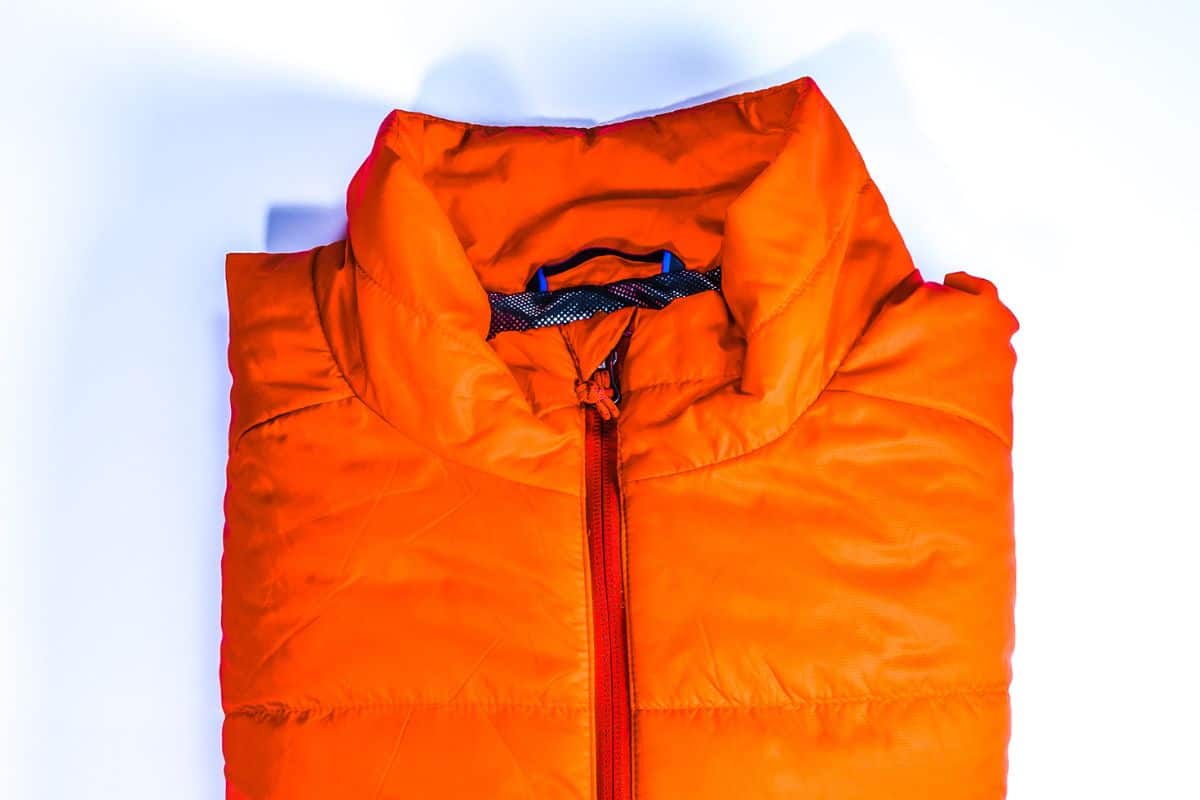
You may be used to seeing temperature ratings on sleeping bags as they can be used to make sure you stay toasty warm while asleep, even when the outside temperature drops.
When resting in a sleeping bag you remain relatively inactive so it becomes easier to calculate the temperature rating as your body temperature should remain consistent.
Calculating the temperature rating for an insulated jacket becomes a lot harder to determine due to the higher number of variables.
Some outlets may even simply use their own rating and it could be something as simple as ‘warm’, ‘warmer’, and ‘warmest’.
While that does sound like a game of hide and seek, such a simple rating system can be justified by using a combination of temperature rating factors.
The ‘warmest’ ratings are typically for those insulated jackets where you can expect the temperature to drop below freezing as they would keep you warm, even in extreme temperatures.
‘Warmer’ ratings are to be worn during consistently mild winters where you may expect some snow but not for the temperature to remain below freezing.
You should see it on an ultralight and packable insulated jacket which should keep you warm but also be packed away easily.
The ‘warm’ rating is focused on a thinner insulated jacket and may even be a vest or fleece jacket that you would typically wear as an additional layer.
These simple ratings may also use a temperature in Fahrenheit to let you know in which temperatures you should be able to fully enjoy the insulated jacket.
There is an element of simplicity with these ratings as they do come with the consideration that the wearer will be under several layers before they put on the insulated jacket.
Thankfully, various measures do help to calculate the temperature rating of an insulated jacket with more definition.
The Down Fill Rating
This measure is down to quality, not quantity. As you can imagine, the down fill weight can be measured quite easily though the rating is more of an indicator of how warm the insulated jacket should keep you.
This rating is associated with the volume of down which is measured in cubic inches and not the weight.
Just a single ounce of 700-fill down should occupy a full 700 cubic inches in volume which is where the value derives from.
With a higher down fill rating, you can expect more trapped air so more warmth in each ounce of down. Essentially, you are getting more for your money with a high down fill rating.
The Down Fill Weight
Perhaps the easier factor to measure is the down fill weight which is simply the total weight of all the down in the insulated jacket.
The amount of down should be used with the other factors yet can easily be compared across a range of insulated jackets.
However, the type of down is also important as well as how it is used so it may be useful to look at the warmth per weight ratio.
For instance, two insulated jackets with the same down fill weight can be judged by which has the higher down full rating.
The difference between the two factors can be seen in a 700-fill insulated jacket which has a larger down fill weight than an ultralight insulated jacket, even one with an 800-fill rating.
Typically, you would be expected to spend more on the higher fill rating than the down fill weight.
TIAX Instrumented Manikin (TIM)
That’s right, if you find TIM then you should not be alarmed. TIM does technically exist as an instrumented manikin, he even has ‘copper skin’ and measures 5 feet and 11 inches.
TIM is used to assess the thermal insulation of the US military and various clothing materials.
The way TIM works is by using heaters and sensors to measure it’s body temperature when wearing an insulated jacket.
Imagine TIM as a typical human being and you can see why it proves such an objective way of measuring a temperature rating.
TIM is placed in a chamber in an insulated jacket over a set of specific everyday clothing that remains consistent, only the insulated jacket changes.
The testers then deliver some electrical power to all the wires that sit in his skin to hit a body temperature of 35°C.
This creates the ideal conditions for a human and the testers then drop the temperature in the chamber to mimic the cold you may experience during autumn and winter.
The measurement is based on the amount of power that is required to maintain TIM’s constant body temperature of 35°C.
There is a complicated formula that is applied yet those test results mark the outdoor temperature range so that the wearer would remain warm and not notice the drop in temperature.
This is a veritable way to ensure that the insulated jacket performs as you expect in the temperature range you face.
The Expected Weather Conditions
Taking into account all these factors, you should be aware of how you expect to use the insulated jacket and the weather conditions you can expect to face.
Should you live in a cold climate and enjoy going out in winter then you should look for a high down fill rating and weight.
However, if you expect to face precipitation then a standard, feathered down insulated jacket would lose a lot of its heat retention once it gets wet.
Thankfully, there are water-resistant treatments that can be applied to down feathers that do help to repel water and allow the wearer to feel dry faster.
This is where a synthetic insulated jacket can come in very handy. As the fibers are man-made and constructed to be moisture resistant, you can expect to remain warm in one when the rain is pouring.
Should you expect to be facing wet conditions then you may want to go for synthetic down, this is an essential choice if you get damp and there are few opportunities to dry the insulated jacket out.
For a trip where the weather conditions may be inconsistent, the moisture can increase and over time the down feathers can lose their loft which would compromise the jacket’s heat retention and leave you feeling cold.
How To Choose An Insulated Jacket?
When you are choosing your insulated jacket, you should find the one that is ideal for you. If you can expect freezing temperatures then go for a higher down fill weight and rating.
However, things become a bit more complicated if the weather conditions are indifferent as you may opt for a synthetic insulated jacket you can rely on during a quick rain shower.
The Types Of Insulation Found In An Insulated Jacket
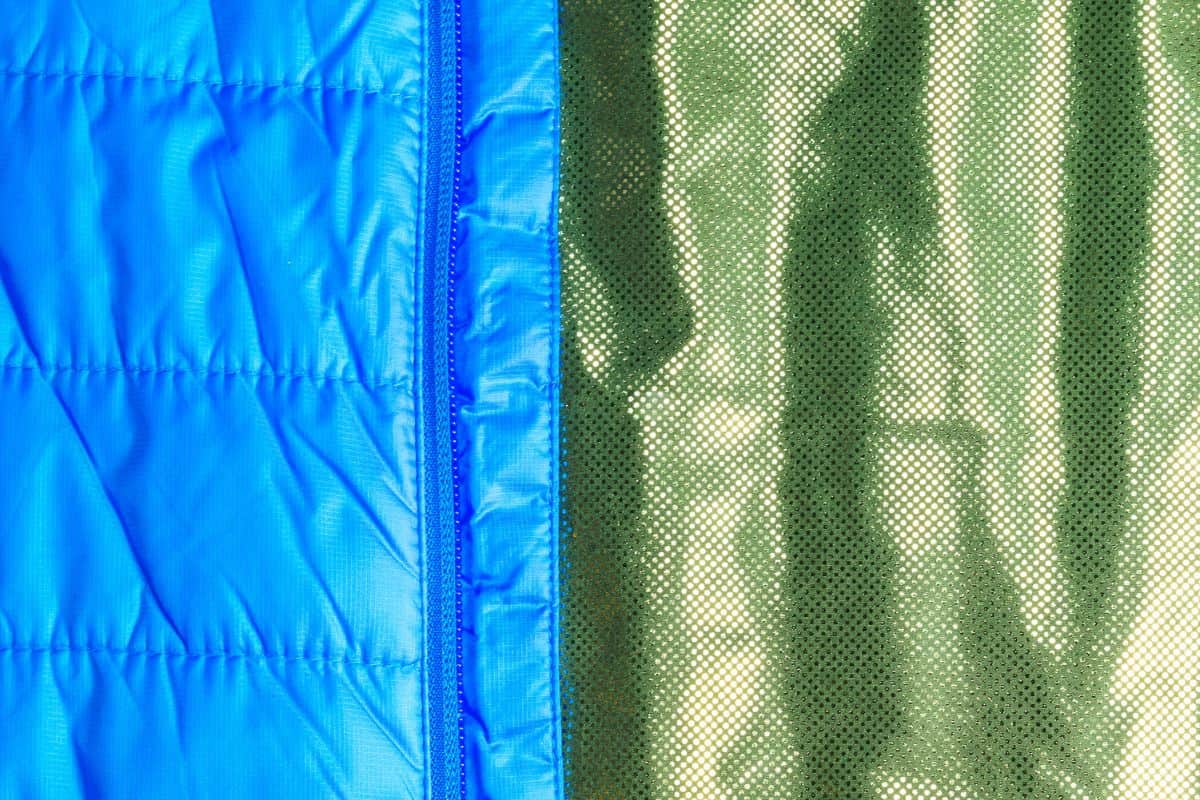
When you do look at the type of insulation that is found in an insulated jacket, you may only find three and they are drawn from essentially two materials.
Synthetic Fill
The synthetic fill consists of man-made strands of polyester known as polyfibres which create those pockets of warm air.
As it is polyester, the fibers are created in a laboratory and designed to be moisture-resistant so you can be confident of staying warm, even when it is raining.
If you do not want an insulated jacket where the insulation has been derived from an animal then this is an ethical choice to make too.
The synthetic fill is such that it should mimic how down keeps an individual warm though without all that bulk. The insulation is arguably more breathable and can even be cheaper.
There are drawbacks which include how the heat loss comes in faster than it does with natural down, even though the heat circulation is still excellent.
This may be an ideal scenario if you are creating body heat and moving around.
Some synthetic insulation is even closer to that of down by mimicking the shape of feathers in the fibres.
This can bring the best of both materials as the synthetic insulation is ideal for handling moisture, keeping warm, and should dry quickly should it get wet.
While cheaper than natural down, it should prove easier to clean and maintain though you would need more of the insulation to reach the same temperature rating so it would be heavier.
For anyone keen to get in the outdoors when it is both wet and cold then a synthetic fill insulated jacket is ideal.
Down Insulation
Down insulation is retrieved from ducks and geese as it is made from the tiny feathers that are found close to the bird’s skin underneath their main, bigger feathers.
As it keeps them warm, it should keep you warm too. Do not fret, the feathers are usually sourced ethically from the food industry so they are not the result of force-feeding or live-plucking which is especially cruel.
Feel free to check with the brand to confirm that the down has been ethically sourced before you buy the insulated jacket.
The down is used instead of normal feathers as it can retain its loft just on its own. Typically, you can find percentages of down which balances out with the percentage of feathers and are used to classify a ‘down insulator’.
When you do check a down product, you should expect a ratio of around 80/20 favoring down to really feel the benefit.
If you need to compare, the down from geese typically has a higher warmth-to-weight ratio so you could get away with a lighter jacket, these feathers also pack down into a smaller space than those of a duck.
The down works by being compressed where the filaments in each fiber create a tiny air pocket to keep the air in, which is how ducks and geese keep warm in the real world.
When used in an insulated jacket, you can expect an excellent warmth to weight ratio while remaining curiously lightweight.
The ‘loft’ is the known measurement of how warm a down-insulated jacket is. This is measured by the fill power, the volume of cubic centimeters of one gram of down when it is fully fluffed up.
The fill power can range from 550 just for a medium fill power and go up to 900 for very high fill power.
With a higher fill power and a higher loft, more warm air can be trapped in the down and the jacket can be more packed so it should be lighter too.
The fill power is determined during the manufacturing process when the down is sorted then washed and finally sterilized.
Alas, there is a drawback to down insulation and that is how it loses its heat-retaining ability when wet and they are certainly not considered waterproof.
If you see a duck or goose that has recently left the water you will notice how the feathers stick together, that is not ideal for an insulated jacket so if you do choose down, you should be confident that the weather will remain dry while you are wearing the insulated jacket.
It can take a long time for these insulated jackets to dry out as the moisture means that the down clumps together so those air pockets become compromised.
With that in mind, you should be sure to pack a waterproof layer to place on top in case it rains.
You may be able to get a water-resistant, hydrophobic coating (also known as Hydrodown) for your down jacket which can help the jacket treat moisture better.
However, a synthetic fill jacket would still exceed the comparable performance. A lot of insulated jackets come with a durable water-repellent (DWR) coating so that should be sufficient for a quick rain shower but not if it turns torrential.
Though lightweight and package while being able to offer superior warmth, down insulation is not ideal when it rains (unless the jacket is specified as waterproof) and it may prove harder to clean and maintain.
Synthetic/Down Mix
A mix of the two materials is less common but is an attempt to get the best from both synthetic and down, it may also be known as hybrid insulation.
This is not a pure mix throughout the insulated jacket as the two materials are used in a technical sense in specific places.
The mixture is to save on weight but increase the functionality so you typically find the synthetic fill in the arms and shoulders of the insulated jacket.
The synthetic fill may also be in the core body area to keep the precipitation out and because the material works better when compressed as you can imagine if you are carrying a backpack.
You would find the down across the main body which means that the insulated jacket should still maintain its highly packable characteristics and provide superb warmth.
The Features Of An Insulated Jacket
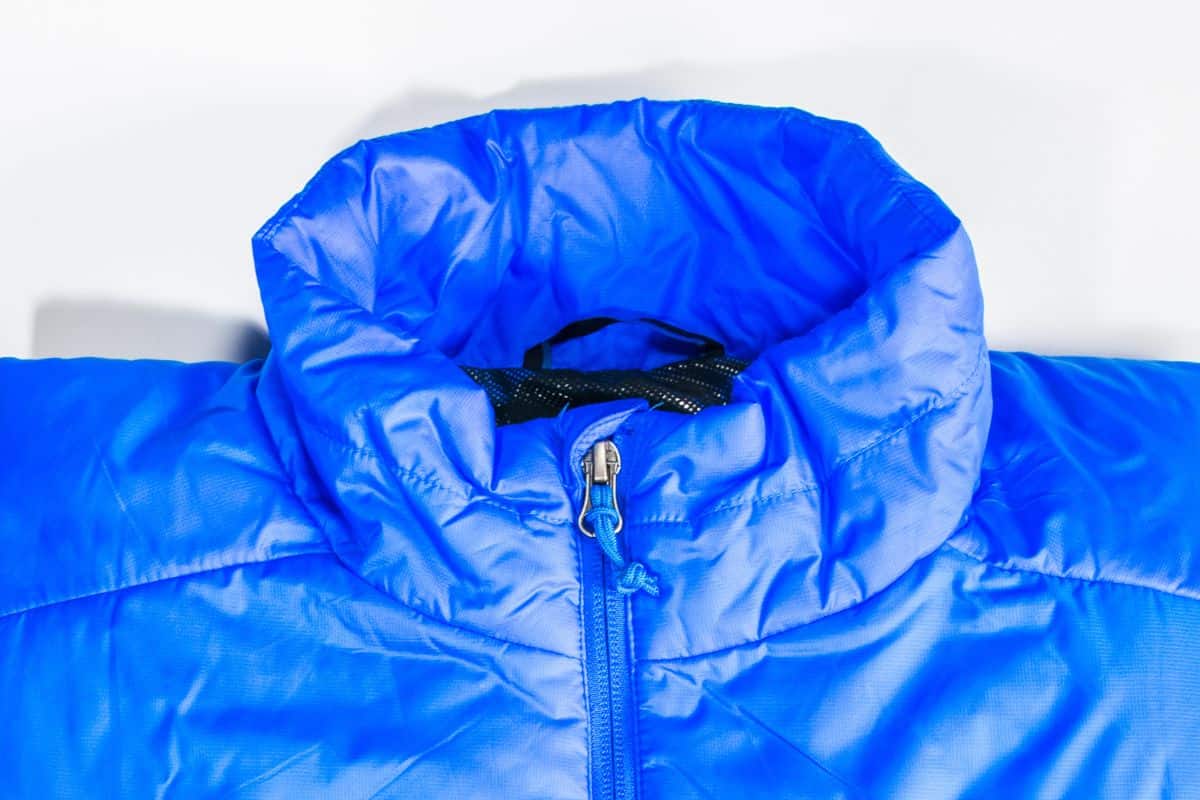
You may wonder why an insulated jacket looks to be compartmentalized. This is to ensure that the insulation stays in the right places to keep you warm.
These compartments are known as baffles which contain the insulation and prevent it from simply gathering at the bottom of your insulated jacket like it typically would.
The even distribution of the insulation provides an overall warmth yet this insulating performance can be enhanced by how each baffle is constructed.
Box Wall Baffles
With box wall baffles, the stitching is specifically designed so that it reduces heat loss and packs in the insulation. As it is so tight, the insulation can expand as far as it wants to reach the maximum loft.
You should expect to pay for box wall baffles as they do a superb job of removing the possibility of cold spots.
For those bulky, puffier jackets, you can expect box wall baffles to feature and they are ideal for when you expect the outside temperature to dip below freezing.
Stitch-Through Baffles
While stitch-through baffles do keep an even distribution of the insulation, the stitching can mean that heat is lost. This is a crucial factor that could prove the difference between which insulation you go for.
As the outer shell fabric is stitched to the inner fabric of the liner it will create pockets but also cold spots at all those seams.
You should expect to pay less for stitch-through baffles though it can mean that the jacket is lighter which is ideal for ultralight jackets when you are heading to the mountains during summer.
The Size Of The Baffles
Even the size of each baffle is important as it determines how much insulation is kept in each one.
Typically, the wider the better as they can contain more down yet their construction can mean fewer seams in the stitching which would allow the heat to escape.
The only drawback is how bulky the insulated jacket can feel and how large it remains when you try to compress it into your backpack.
Narrow baffles tend to be found in micro baffle jackets and can be aesthetically pleasing while still keeping you relatively warm whether it is cold or wet then compress down so you can pack them away easily.
The Possible Drawbacks Of Giving Temperature Ratings
Not every company gives out temperature ratings for its insulated jackets. One such company is Patagonia which released a statement asserting that they believed that temperature ratings were simply too subjective.
The feel of a given temperature can all depend on the weather conditions such as the cloud coverage, the wind, and surrounding humidity. The temperature rating may also differ between individuals depending on how someone handles the cold.
Should an individual be more acclimatized to warm temperatures then they may perceive the cold more intensely than an individual who is more used to it.
Even what you have eaten can affect the feeling of warmth as a decent breakfast should see more energy flowing through the body and such fuel can be crucial.
Simply by exercising and working up a sweat can generate body heat and the layers of clothing, especially base layers, take on extra importance.
Unlike the temperature ratings on sleeping bags where the individual tends to be inactive, the temperature rating on insulated jackets is more difficult to ascertain due to the individual’s activity levels.
The Top Insulated Jackets Depending On Temperature Ratings
While there remains a lack of consistency across temperature ratings, independent testing can provide some average lowest temperature ratings.
These do come with the assumption that everyday clothes are being worn underneath and the insulated jacket is not covered with another layer.
The weather conditions should also be dry with only a light wind and the activities it is worn for are more consistent for daily use such as taking a stroll and not climbing a mountain.
One brand that does stand out for temperature ratings is Arc’teryx and their Arc’teryx Alpha Parka has a rating of -17°F (-27°C).
The Arc’teryx Ceres insulated jacket is one of the highest for temperature ratings as it is estimated to keep the body temperature consistent from -15°F (-26°C).
The Arc’teryx Firebee AR women’s jacket is rated lower at -10°F (-23°C). Other high rated insulated jackets include the Feathered Friends Khumbu at -18°F (-28°C) and the Mountain Equipment K7 at -13°F (-25°C) which is the same temperature rating as the Rab Positron Pro.
Final Thoughts
There does seem to be a general rule of thumb when it comes to insulated jackets which is that thickness equals warmth.
There is more complexity to it than that as the type of insulation used can retain warmth better than other materials.
If you wanted to get an insulated jacket that packed away easily then the bulk, and even the type of baffles used, is important.
Though the down full rating and down fill weight are important, they should align with the weather conditions you are expected to experience.
Having synthetic insulation may be better if you expect the rain to come and do not want to compromise the heat retention in your insulated jacket.
You may also want to consider a hood just for that extra comfort over your head when the temperature drops.
Frequently Asked Questions
What Temperatures Are Ideal For Winter Jackets?
When the colder months approach and you know that winter is coming, it is time to find those thicker jackets.
A properly insulated jacket for winter should be ideal in temperatures under 25°F (-4°C), For temperatures slightly above that between 25°F (-4°C) and 44°F (6.7°C) should necessitate a light to medium jacket.
You may be able to find a fleece jacket appropriate for temperatures between 45°F (7.2°C) and 64°F (18°C).
Should I Go With A Hood For My Insulated Jacket?
The insulated jacket should be able to keep you warm and dry in quick showers, and a synthetic fill insulated jacket would perform better in wet conditions.
The hood can also keep your head dry and should be of benefit when the temperature drops and you are not really being very active.
However, the hood would provide more weight and an awkward bulk that you would notice when trying to pack the jacket away.
Having a hood can also be a comfort when the weather is particularly cold as putting it on can keep the heat from escaping from your head.
You should still be wearing a thick woolly hat yet the hood can provide an extra secure layer. Yet if the weather is expected to be dry and warmer, you should look to pack an ultralight jacket with a hood.
Need More Advice on Gear and Footwear?
Here are some links to our most popular articles:
- How to Lubricate a Sleeping Bag Zipper
- The Difference Between Arc’teryx Proton Vs Atom Jackets
- What are Crampons vs Microspikes? Hiking Crampons and Why You Need Them
- Best Sleep Pad Systems for Cold Winter Nights
- Best Men’s Jackets with Down Insulation
Join our Facebook Group – Outdoor Gear Reviews, Deals, Hacks & Advice- Backpacking, Hiking & Camping to get the latest reviews, deals, and discounts on backpacking, camping, and hiking gear. Share tips, and advice and to show our love, we also give monthly gear giveaways.