![[Staging: The Hiking Adventure]](https://staging.thehikingadventure.com/wp-content/uploads/2021/10/The-Hiking-Adventure-logo-high-res.png)
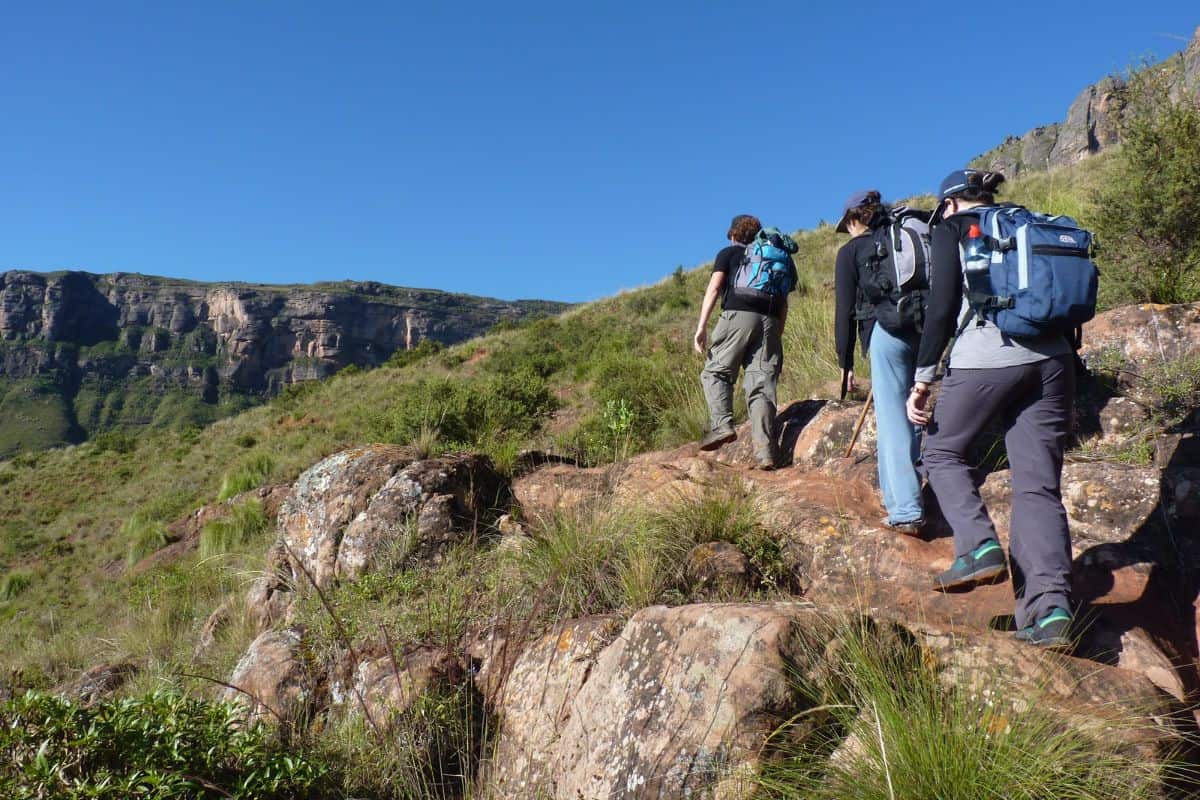
Hiking is a great way to get some exercise and enjoy nature. It allows us to explore our surroundings and connect with nature. Hikers often choose trails that take them through beautiful natural landscapes or along scenic rivers.
Before setting out on a route it is important to create a hiking plan. Being able to calculate your hiking pace is vital to creating an accurate hiking plan and in this guide, we show you two different formulas that can be used to do exactly that!
How To Calculate Your Hiking Pace
If you want to calculate your hiking pace, you should use the following formula:
Average hiking speed (generally): 1.0 MPH to 3 MPH (depending on the hill)
Pace MPH= Miles/Total Moving Time
For example, if you walk 2 miles in 20 minutes, then your hiking pace would be Pace= 2 miles/ 20 minutes= 10 minutes /mile.
However, there are other factors that could affect your hiking pace. Some of these include weather conditions, terrain, and personal fitness level. Depending on how steep the hill, add an extra 30 minutes for every 1,000 feet of elevation.
In order to determine what your ideal hiking pace is, you should take into account all of these factors. Once you figure out which factor has the biggest impact on your ability to hike at a specific pace, you can adjust it accordingly.
For example, if you are new to hiking, you might want to start by walking slowly. However, as you gain experience, you will learn how to hike at a higher speed.
In addition to being physically active, hiking is also mentally stimulating. This means that it helps you relax and unwind.
As a result, it makes you happier and healthier. When you combine all of these benefits, you will realize why so many people love hiking.
Munter Method
The Munter method is not one size fits all. It’s an art and science that relies on your subjective rate of travel to make it work for you, but there are guidelines in place so adjusting these rates will be easy!
Legendary alpinist, Werner “Werni” Munter invented this method for estimating backcountry travel time based on his extensive outdoor experience in the mountains over many years – it’s straightforward but relies subjective rates to make it work!
There are guidelines which will help you find your own unique rate-of travel; however adjustments have been made specifically according with Werni’s system so as not break any mathematical rules or norms while still getting an accurate answer about how long one can expect before becoming stranded out there…

Naismith’s Rule
William W. Naismith, a Scottish mountaineer, devised the Naismith Rule in 1892 as a means for calculating how long it would take to complete a hiking route while also considering additional time as a result of uphill sections of the hike.
Many people who are setting off on a hiking expedition use this rule to get a general idea of how long it may take to complete their trip.
The original rule was based on giving one hour to complete three miles on a route’s map and adding another hour per 2000 feet of uphill climbs and walks.

Using Naismith’s Rule To Calculate Hiking Pace
Naismith’s rule states that when you divide the distance covered by the total elapsed time, you will get the average number of steps taken during the activity.
In this case, the average number of steps is equal to the quotient obtained by dividing the distance covered by the elapsed time.
For example, let’s say that you walked for 5 hours and 15 minutes. In this case, you have walked a total of 6.5 miles. Therefore, the average number of footsteps is equal to the quotients obtained by dividing 6.5 miles by 5 hours and 15 minutes, which equals 1.1 miles per hour.
The above calculation is only valid if the distance covered is greater than zero. If the distance is negative, you should subtract the distance from the elapsed time instead of adding them together.
The following table shows some examples of calculating hiking pace using Naismith’s Rule.
Distance – Time Elapsed – Time Steps Per Hour.
- 0-100 yards 10 minutes 25 seconds 0.25 miles per hour
- 100-200 yards 15 minutes 30 seconds 0.75 miles per hour
- 200-300 yards 20 minutes 40 seconds 1.0 miles per hour
- 300-400 yards 25 minutes 50 seconds 1.3 miles per hour
- 400+ yards 30 minutes 60 seconds 1.6 miles per hour
As you can see, Naismith’s rule works well for short hikes but not for long ones. The reason behind this is that the total elapsed time becomes very large when you hike for a long period of time.
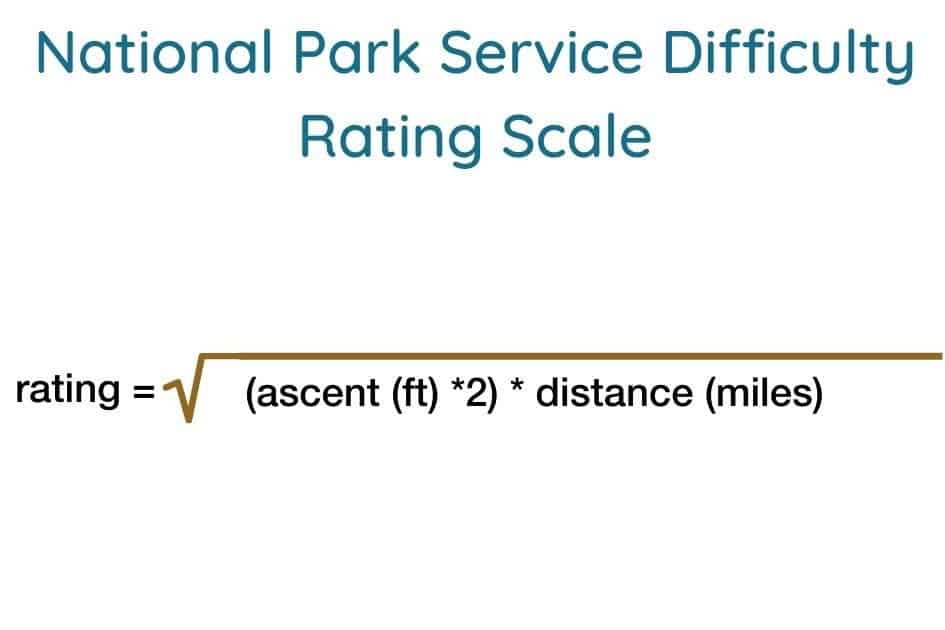
The National Park Service Hiking Difficulty Rating Scale
When you plan your next hike in Shenandoah National Park, use this scale to determine your hiking pace, based on difficulty rating and distance. A lower number means that it will take less time for someone who is inexperienced and/or doesn’t have much equipment while a higher one suggests more challenging trails with high elevations or steep slopes
The best way is using math! The National Park Service created a formula that takes into account both distance traveled as well as elevation gain on each route so no matter what type of person (novice vs experienced) there are plenty of options available
How To Improve Your Hiking Speed
As mentioned above, hiking is a great way to enjoy nature and get some exercise. It’s important that you know how to hike at an efficient pace. Here are some tips:
- Walk slowly – The first thing you should do is to start out slowly. You should begin with short distances and build up gradually.
- Improve Your Posture- By keeping your spine in neutral. Use hiking poles to stabilize your knees and hips.
- Walk uphill – If you find yourself struggling to maintain a fast pace while hiking uphill, build leg strength by doing squats, lunges, calf raises before hitting that trail.
- Wear appropriate shoes – Make sure that you buy shoes that fit properly. They should allow your feet to move freely without causing pain. Certainly, don’t wear brand new shoes without breaking them in first. Spend at least a month breaking in your shoes.
- Wear comfortable clothes – Wearing tight pants or shirts can cause discomfort and lead to muscle cramps. Instead, wear loose-fitting clothes that won’t restrict your movement.
- Take breaks – When you reach a point where you need to rest, stop and sit down. Take advantage of the break to drink water and stretch your legs.
- Have fun! – When you are enjoying your hike, you will be more motivated to continue. Try taking pictures of the scenery and enjoy every moment.
Final Thoughts
Hiking is one of the most popular sports around the world. It provides people with a chance to escape from their busy lives and reconnect with nature. If you want a healthy hobby, you should consider starting a hiking club at your local park.
Being able to make an approximate guess as to how long a route will take you enables you to make a more accurate local hiking plan or hiking rim-to-rim of the Grand Canyon. Before setting out, ensure you share your hiking plan with a family member or friend.
If you were to go missing they will then be able to use your hiking plan to guess where on the route you may be and this will benefit rescue teams in finding you.
Need More Advice on Gear and Footwear?
Here are some links to our most popular articles:
- The 10 Types of Tents- Buying Advice
- Workout Plan to Prepare for Uphill HIking
- Best Sun Hats for Hiking- Women’s Buying Guide
- BEST DAYPACK FOR HIKING: BUYING GUIDE & RECOMMENDATIONS
- Hiking the Four Pass Loop in Colorado
Join our Facebook Group – Outdoor Gear Reviews, Deals, Hacks & Advice- Backpacking, Hiking & Camping to get the latest reviews, deals, and discounts on backpacking, camping, and hiking gear. Share tips, and advice and to show our love, we also give monthly gear giveaways.