![[Staging: The Hiking Adventure]](https://staging.thehikingadventure.com/wp-content/uploads/2021/10/The-Hiking-Adventure-logo-high-res.png)
A good night’s sleep is essential if you want to be bright-eyed and bushy-tailed on the trail. Choosing the best sleeping pad for backpacking protects you from the cold ground and lumps and bumps that Mother Nature presents.
Unless you have a team of sherpas carrying your kit, you’re probably not going to be able to bring your comforter and memory foam pillow, but a decent sleeping pad will make all the difference.
Quick Recommendations- Our top picks:
- Thermarest NeoAir XLite: Best Overall Sleeping Bag Pad
- Thermarest NeoAir X-Therm Backpacking Sleeping Pad: Best Cold Weather Sleeping Bag Pad
- Klymit Static V Non-Insulated Lightweight Sleeping Pad: Best Budget Sleeping Bag pad
*The above links will take you to Amazon to learn more
Sleeping Pad Reviews
Backpacking sleeping pads may not provide all the comforts of home, but buying a good camping mattress can still have you waking up with a song in your heart, rather than a crick in your back.
We’ve reviewed the top 10 best sleeping pads on the market and have also put together a buying guide so you’ll know what to look out for when choosing yours.
Therm-a-Rest Prolite Apex Self-Inflating Backpacking Sleeping Pad
 $81.20
R-value: 3.8
Weight: 1lbs 6oz
With an R-value of 3.8, this Neo air pad is a great choice for shoulder-season backpacking and works fine for summer or mild winters too.
It weighs 1 lb 86oz, so it isn’t an ultralight sleeping pad, but it’s still fairly light when you consider the durability, comfort and insulation it provides. What’s more is that it’s equipped with a dependable and rugged WingLock valve, which allows the camping pad to inflate three times faster than a classic valve and deflates lightning fast.
The SpeedValve is a great feature if you like setting up and setting off in double quick time. That said,filling takes a bit of blowing after you allow it to self-fill, as much as it will, then top it off by blowing.
To sum it up, this Therm-a-lite Pro Lite Self-Inflating camping pad is one of the best practical combinations of lightweight, compact pack size, comfort, and warmth.
What We Like
- More than 100 isolated cells distribute air evenly for great stability
- ThermaCapture layers help to retain body heat and gives this pad an excellent warmth-to-weight ratio
- SpeedValve halves inflation time and deflates almost instantly
- 75D polyester bottom and 50D (75D on the newer model) top fabric provide good durability
What We Don’t Like
- Not as light as we’d like
- A little noisy when adjusting sleeping position
Therm-a-Rest Neo-Air XTherm Sleeping Pad for Backpacking

R-value: 5.7
Weight: 1lb 4oz
Best for: cold weather backpacking
Sleeping pads that are warm enough for winter backpacking are often pretty heavy thanks to the insulation.
This sleeping pad has an R-value of 5.7 which makes it great for cold weather camping. Despite its large size, it only weighs 1.4 pounds.
The smart ThermaCapture layers means less additional insulation material, and the tapered mummy shape reduces the overall weight of the sleeping pad.
The tapered shape is quite pronounced and will best suit side sleepers.
What We Like
- ThermaCapture layers give great insulation without adding too much weight
- Baffled internal cells give good stability when moving around
- Packs down compactly to the size of a water bottle
- Stuff sack doubles as a pump sack for easier inflation
What We Don’t Like
- It’s a little narrow. Get a size up if you want your arms to stay on it.
- Makes a bit of noise when moving
Klymit Static V Lightweight Sleeping Pad
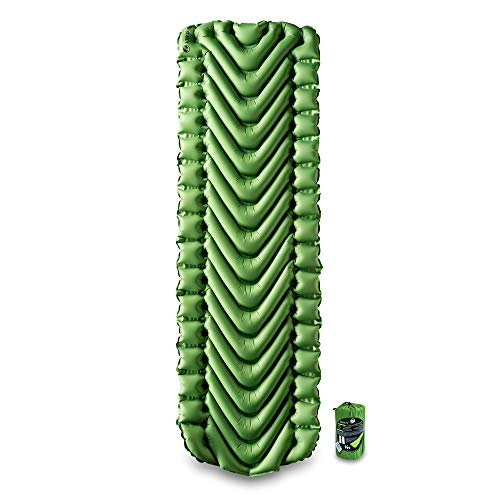
R-value: 1.3
Weight: 19oz
If you’re looking for a budget friendly sleeping pad, this is a great choice.
With an R-value of 1.3 it’s only suitable for summer backpacking, or shoulder season if you’ve got a closed-cell underneath – and a warm ultralight sleeping bag.
For the price, you get a very comfortable sleeping pad that weighs in under 19 ounces and packs up into a bag the size of a water bottle.
The 75D polyester material is durable, and it comes with a lifetime warranty.
What We Like
- Good comfort at a great budget price
- Easy to inflate (10 to 15 breaths) and deflate
- Side rail cells keep you from rolling off
What We Don’t Like
- If you’re a side sleeper and a little heavy, you will feel the ground when rolling over.
Thermarest Neo Air XLite Backpacking Mattress
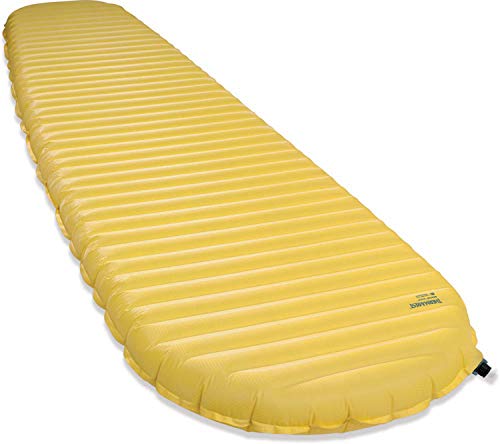
R-value: 3.2
Weight: 12oz
If you want an ultralight sleeping pad that still performs in cooler spring / fall conditions, then this Therm-a-rest is a good option.
The internal construction and ThermaCapture layers result in an R-value of 3.2 at an impressively low weight of only 12 ounces for the regular size.
The 2.5? thickness and soft-touch fabric make for a very comfortable sleeping pad. Combined with a decent 3-season sleeping bag, you’ll be all set for those shoulder-season chills.
What We Like
- Excellent warmth-to-weight ratio makes this a good 3-season sleeping pad.
- Baffled internal structure provides excellent support and stability
- Really light and packs down to the size of a water bottle
What We Don’t Like
- A little noisy at first but it quiets down with use
- Takes a little longer to inflate than we’d like
Big Agnes Insulated Q-Core Sleeping Pad

R-value: 4
Weight: 24oz
If you’re looking for a really warm sleeping pad, then this rectangular air pad with an R-value of 4 is a top choice for a 4 season camping pad.
At 4.2 inches thick, it’s also going to be one of the most comfortable sleeping pads you’ll ever own, especially with a quilted top for added comfort.
The Big Agnes Insulated Q-Core weighs 24 oz, which isn’t for the ultralight backpackers but if you’re looking for a well-insulated backpacking sleeping pad and aren’t ounce-counting, then it’s worth a look.
You’ll need to huff and puff to fully inflate it, but the quality of materials and level of comfort make this a great winter sleeping pad choice.
What We Like
- High-loft synthetic insulation for superior warmth
- Antimicrobial treatment prevents microorganism growth inside the pad
- Cell layout provides good support and keeps you cradled on the pad
- High durability material and quilted top very comfortable
What We Don’t Like
- A bit difficult to blow up
Sea to Summit Comfort Light Insulated Sleeping Mat

R-value: 3.7
Weight: 22.4 oz
If absolute comfort is your top priority then this air pad ticks all the boxes. The individual air cells allow for excellent weight distribution even when adjusting your position. Sea to Summit Comfort Light Insulated Sleeping pad features a hybrid layer Air Sprung Cell technology – a double layer of high-resolution cells in the torso for maximum comfort and insulation, and a a single layer of medium resolution cells in the head and legs.
The two hybrid inflation layers allow you to inflate the bottom layer fully for maximum isolation from the ground, while reducing the upper layer inflation for a night of softer sleep.
At 22.4oz it’s certainly not the lightest sleeping pad but once you lie down on it you’ll forgive it the few extra ounces.
Best for hike-in camping when you’re not trying to shave ounces off your pack. This 3 season sleeping mat is 2.5″ thick and sufficient from early spring to fall camping.
What We Like
- 548 air sprung cells distribute the air evenly for good support and stability
- Two independently pressurized layers allow for fine tuning inflation for optimum comfort
- Antimicrobial treatment prevents internal bacterial growth
- Good durability with extruded TPU layer that prevents delamination
- Quick easy inflation and near-instantaneous deflation
What We Don’t Like
- A little heavier than we’d like
Nemo Tensor Ultralight Sleeping Pad
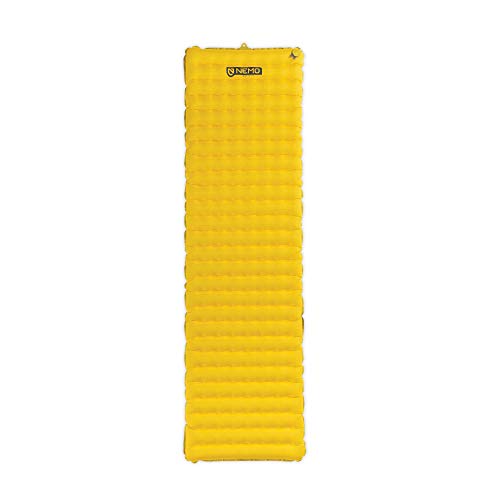
R-value: Nemo doesn’t use R-values!
Weight: 13.5oz
If you weigh and measure all of your kit but still insist on a good night’s sleep then this ultralight, the compact sleeping pad will do the trick.
It’s only 3 inches thick but the layout of the baffles and non-stretch material makes it very comfy.
The insulation is good for temperatures down to around 30 to 40 degrees.
It comes in either a 20 or 25 inch width and weighs in at a very light 13.5 ounces for the 20 inch regular size. The 20 inch felt a little narrow so we’d rather go for the 25 inch pad.
What We Like
- Non-stretch fabric and baffles provide excellent point-deflection resistance – no bottoming out with elbows or hips.
- Primaloft insulation and Aluminized film provide great insulation and radiant heat retention
- Side baffles provide good support when you roll towards the edge
- Compact and ultralight
What We Don’t Like
- The 20 inch size is too narrow
Outdoorsman Lab Ultralight Sleeping Pad for Camping
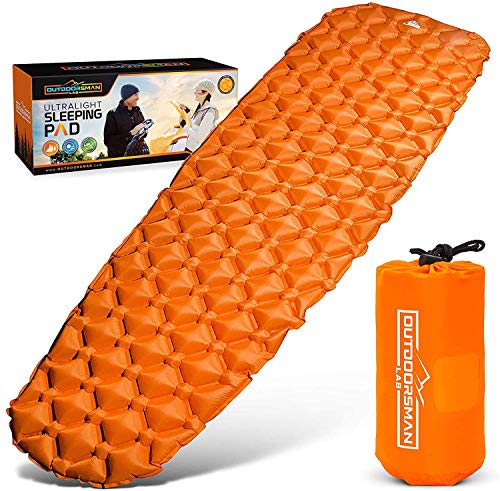
R-value: 1.3
Weight: 16oz
This sleeping pad is ideal if you’re looking for a lightweight summer pad at a low price.
With an R-value of 1.3 you’re not going to take this out in winter but even without insulation the way the air channels are designed allow for decent warmth.
The big valve makes it easy to inflate and deflate and it packs very compactly.
It’s only 2 inches thick but the cell arrangement provides good support and comfort.
What We Like
- Ultralight and packs down compactly
- Easy to inflate – 10 to 15 breaths
- Very durable – Ripstop 20D Nylon fabric with TPU coating
- Air cell layout provides good comfort and support
- Price
What We Don’t Like
- Bottoms out at the hips a little if you’re on the heavy side
Therm-a-Rest Z Lite Sol Foam Sleeping Pad

R-value: 2.6
Weight: 14oz
If you’re looking for a ultralight CCF pad for summer or an extra layer of insulation under your air pad for winter then this is a good option.
With an R-value of 2.6 it’ll do a good job in even fairly cool conditions. It folds out easily and lays flat immediately. Folding it up is just as easy.
The rectangular shape makes it a little bulky so you’re going to have to stash it outside your pack.
The dimple design and thermal design elements make this pad more comfortable and warmer than a lot of others we’ve seen.
What We Like
- Heat trapping dimples and ThermaCapture coating provide good warmth
- Very light and compact
- Hard dimples underneath for durability and softer upper dimples for comfort
- Very durable – great for underneath an air mattress
What We Don’t Like
- A bit bulky so it has to be stashed on outside of pack
Therm-a-Rest ProLite Plus Self-Inflating Backpacking Sleeping Pad
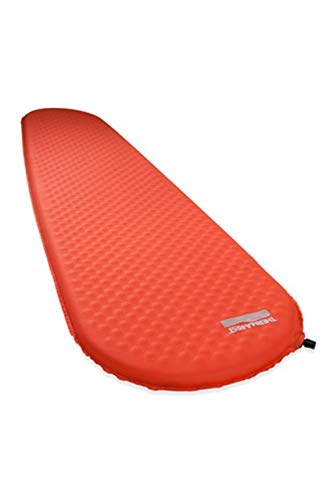
R-value: 3.4
Weight: 1.4lbs
With an R-value of 3.4 this pad is warm enough to use in cold winter conditions, but at 1.4 pounds it’s light enough to rival some summer sleeping pads.
The convenience of being self-inflating doesn’t compromise the weight too much.
The isolating properties of the expanding foam inserts are part of the reason this pad performs so well in winter conditions.
At 1.5 inches thick, the thermarest prolite plus combines good cold temperature performance in a lightweight and compact form factor.
What We Like
- Self inflating allows for easy deployment
- Great compressibility for compact stowage
- Diagonal-cut foam inserts provide excellent warmth
- Very light for a self-inflating pad
What We Don’t Like
- After self-inflating it still needs a few breaths to fully inflate
KLYMIT INSULATED STATIC V Lightweight Sleeping Pad

R-value: 4.4
Weight: 0.99 lbs
The Klymit Insulated Static V Ultralite is 4 season backcountry camping pad that has 20D durable woven denier fabric, durable enough to resists abrasion. It will take you about 10-12 breaths to fully inflate the sleeping mat and once inflated, the insulated air mattress with Klymalite insulation is designed to keep you warm when it’s cold out. We recommend not inflating it to 100%, otherwise, you’ll roll-off.
Sleep comfortably all night long: Features an innovative v-chamber design and synthetic insulation which limits air movement and heat loss. It has a patented V-shaped design that delivers support and comfort no matter how you sleep – on your side, stomach or back
Incredibly lightweight (15.9 ounces) and packs small to 4.5 x 7 inches. Deflated, its about a size of a Nalgene bottle. The inflated size comes to 72 x 20 x 2. 5 inches. If weight and space are important for your upcoming backpacking adventure, this Klymit Insulated Static V is a great option.
Klymit rates this a 4 season sleeping pad but based on whether you are a warm or cool sleeper, you may want to add a bag liner for added warmth when winter camping. Check out best selling sleeping bag liners for your sleeping bag.
What We Like
- Inflates within 10-12 breaths
- Comes with a mini-repair patch kit
- V-Shape ergonomic design
- Compact
- Stuff sack included
- Sleep on your stomach, back, or side
What We Don’t Like
- Tricky valve- a few reports on air leakage
- Not as warm as reported
- Slips & slides in your bag/tent

Sleeping Pad Buyer’s Guide
When buying a sleeping pad for backpacking, you will want something that is comfortable, warm, easy to use, and store.
Sleeping pads come in three main types:
- Air Pad
- Self-inflating
- Closed-cell foam (CCF)
The majority of sleeping pads are of the air pad, or inflatable mattress type.
Some backpackers prefer the closed-cell foam (CCF) mattress pads for their compact size and lightweight properties, while others will be prepared to pay more money to have the convenience and performance you get from the self-inflating pads.
Air Pad, Self-inflating or Closed-Cell Foam?
Air Pad
An air mattress requires manual inflation, so you’ll need to either blow air into it with your mouth or use a pump to inflate it.
Normally it takes about 15 to 20 breaths to inflate a sleeping pad. The higher the altitude, the tougher this is going to be.
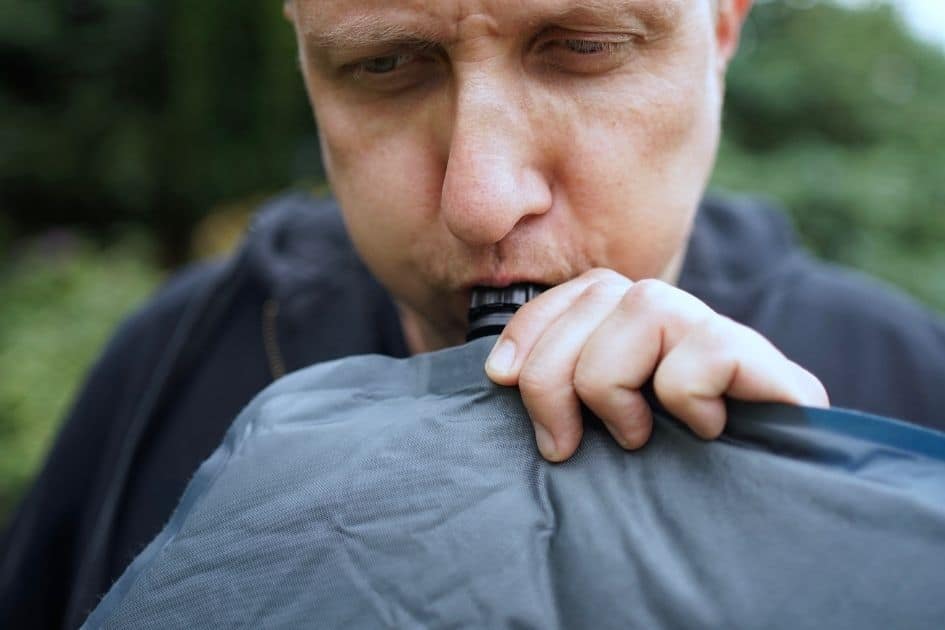
You can use a pump, but it isn’t worth the added weight to your backpack nor justify the effort it saves.
Some sleeping pads will have their stuff sack double as a pump sack. To use one of these:
- Open the stuff sack and scoop air into it
- Roll up the open end to seal it – leaving you with a bag full of air
- Connect the stuff-sack via a valve to the valve on the mattress
- Press down on the sack to push that air into the sleeping pad – voila!
This is a clever way of giving you the convenience of a pump, without having to carry one. It’s more hygienic too.
When you inflate the pad by blowing air in with your mouth you also end up blowing moist air into the pad.
This moist air reduces the isolating properties of the air in it and can lead to the development of bacteria in the sleeping pad.
- Pros: lightweight, comfortable, compact storage
- Cons: can puncture easily
Self-inflating Sleeping Pads
Self-inflating air pads offer a combination of open-cell foam insulation and air. They have foam inserts that expand when the pad is unrolled. As the foam inserts expand, they open up cells in the pad creating a vacuum.
With the valve open, the vacuum draws air into the cells to inflate the pad. The benefit of this is that it saves you a whole lot of huffing and puffing.
Simply unfurl the pad, open the valve and come back after dinner to a fully inflated mattress. A few breaths may be required to get the pressure just right.
Self-inflating pads are usually made from more durable material and provide great insulation. They do tend to be more expensive, less compact, and a little heavier than foam pads or air pads.
- Pros: easy to deploy, great insulation, comfortable
- Cons: not as lightweight as air pads, more expensive, less compact storage
Closed-cell Foam
The closed-cell foam pads, or CCF, are made of little closed air cells in dense foam.
These pads either roll up or fold like an accordion. They are a lot more durable because they can’t be punctured and will also cost less than the air pad or self-inflating pads.
Although lightweight, they can be bulky but store easily on the outside of your backpack without having to worry too much about damaging them.
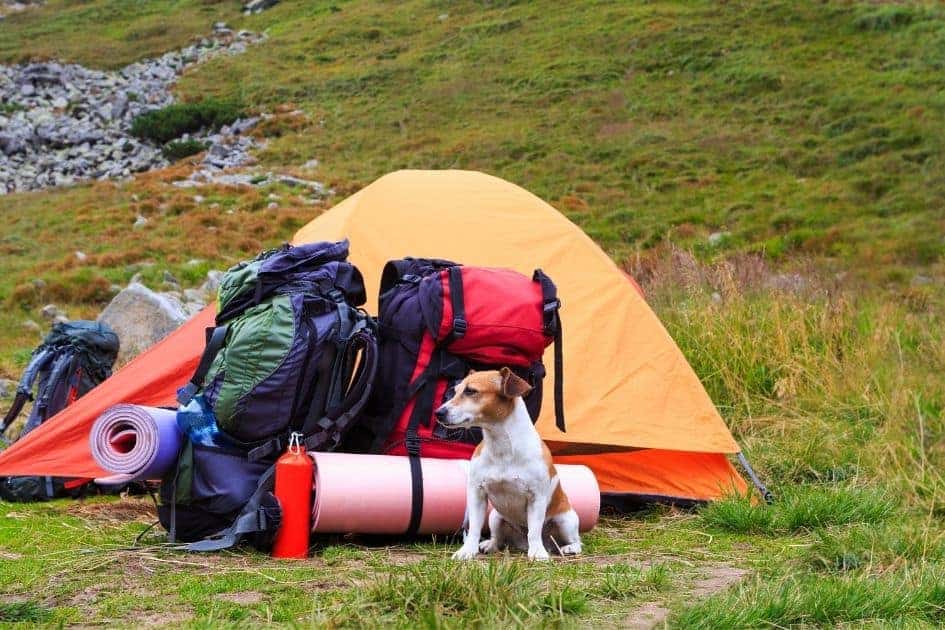
They aren’t the most comfortable though, so make sure you’ve got a flat, even space to lie yours on. These are a good option as an additional insulating layer under an air pad.
- Pros: lightweight, cheaper, more durable than the other two options
- Cons: less comfortable
See more best selling closed-cell foam sleeping bag pads.
Sleeping Pad Shape
Sleeping pads will come in either a rectangular or a tapered wedge shape.
The tapered shape is sometimes referred to as a mummy shape. Basically, the main benefit of the mummy shape versus the rectangle sleeping pad is that it uses less material which shave a few ounces from your pack weight.
The mummy shape also takes up less space which could be an issue if there are two of you trying to fit into a small shelter.
These are a great option if you’re a side sleeper because you won’t miss the reduced width along your torso or at your feet as long as you don’t draw your knees up while sleeping.
If you sleep on your back or stomach then these may not be the best choice. The tapered shape could mean your hands and feet fall off the edges.
Sleeping Pad Warmth & “R-Values”
Camping in the summer, you will be relying on your summer sleeping bag for the majority of your warmer nights and a winter sleeping bag for warmth, having the best sleeping pad will make a big difference to how cold you’ll get.
The reason for this is, even in summer, your body heat is lost to the ground you’re sleeping on. The more you insulate your body from the ground, the more you’ll be able to retain that body heat.
However, the air in the sleeping pad doesn’t provide enought insulation, even with the best insulated sleeping pad. You’ll certainly need at least one layer of synthetic insulating materials, such as sleeping bag lines or warm base layers. Read our tips on What to Wear in a Sleeping Bag to stay warm.
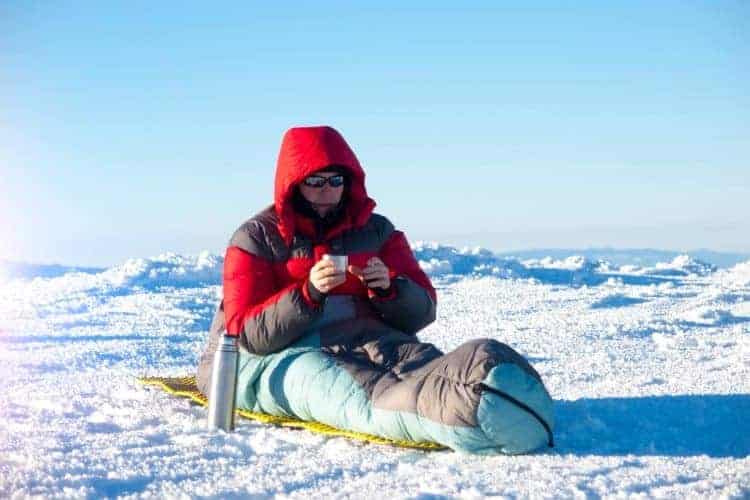
The ability of each sleeping pad to be able to resist heat flow is measured, and given an R-value. The higher the R-value, the better the mattress is at insulating you from the cold floor.
Most sleeping pads will have R-values that range between 1 and about 6. Don’t be tempted to buy the sleeping pad with the highest R-value.
In order to add more insulation, the manufacturer generally has to add thicker material and you end up with a heavier pad.
Here’s a rough R-value guide:
- Summer: 1-2
- Spring and Fall: 3-4
- Winter: 5+
If you’re trying to decide between two sleeping pads with similar R-values, then check out their respective weights.
The warmth-to-weight ratio will give you a good idea of which one uses smarter design and better materials to achieve the required insulation.
Some sleeping pads use smart layering and special materials to capture radiant heat from your body to help keep you warm.
They may also use specially designed channels between the cells to reduce the loss of heat by convection. If you’re going to be backpacking in really cold weather then you need to take all of these into consideration.
If you’re only ever going to be heading out in summer, then focus more on weight and comfort.
Our Favorite- Best Insulated Sleeping Pad
We just loved the Thermarest NeoAir XLite Mattress. Its clever thermal design elements make it ideal for all but the coldest conditions.
The cell layout, baffles and the feel of the fabric make it super-comfortable. These, combined with a low weight make it a standout choice.
If I was backpacking in the winter, I would combine this with a foam pad underneath to boost the warmth.
Best Budget Backpacking Sleeping Pad
If we were counting pennies and still wanted a good sleeping pad then we’d have to go with the Klymit Static V Lightweight sleeping pad.
For summer backpacking, this one would even make us think twice about buying a more expensive sleeping pad.
The quality fabric, comfortable and smart cell design and lightweight compact storage make this a great choice if you’re on a budget.
Conclusion
A comfortable sleeping position is such a personal thing so there’s no one solution that is going to suit every backpacker.
Each one of the products above are great choices but it’s important to give some thought to the conditions you expect as well as your sleeping position and weight tolerance before making your choice.
Weight is important but doesn’t sacrifice comfort so that you can brag about the 2 ounces you shaved off your pack weight.
Investing in a good sleeping system is a combination of choosing an ultralight backpacking quilt, buying the best sleeping pad for your budget so that you can keep warm in a tent, in order to wake up refreshed and ready to take on whatever challenges the next day brings.
Need More Advice on Gear and Footwear?
Here are some links to our most popular articles:
- Insulated Jackets and Temperature Ratings- Why You Need to Know This
- Best Backpacking Packs: Fitting, Features, and Recommendations
- Guide to Best Lightweight Backpacking Quilts
- The 6 Best Car Camping Mattresses for the Road
- What to Look For in a Women’s Lightweight Hiking Jacket
- 11 Best Ultralight Sleeping Bags under 2.0 pounds
- Best Lightweight Rain Gear to Keep You Dry on the Trail
- How to Stay Warm Winter Camping
- 11 Best Bouldering Crash Pads
Product image credits: Amazon.com







Last update on 2022-12-23 / Affiliate links / Images from Amazon Product Advertising API